
✅ Winch Components — What’s Inside The Housing
- Seven core components: motor, gear train (planetary/worm/spur), drum, brake assembly, clutch (free-spool), rope/cable, contactor.
- Planetary gear trains dominate modern winches. Three-stage planetary achieves 156:1 to 265:1 reduction in a compact housing.
- Brake sits inside drum for most 9k+ winches. Pawls engage drum teeth when motor stops. Fails silently if neglected — test annually.
- Drum diameter and length drive rope capacity. Standard 9k drum: 2.5″ dia × 8.7″ long = 80 ft 5/16″ steel capacity.
- Cold-rolled steel housings outlast cast. Cast housings crack under shock. Forged/billet housings handle competition abuse.
Every recovery winch — whether it’s a 2,500 lb ATV unit or a 16,500 lb heavy-duty truck winch — is built from the same core set of components working together. The motor spins a gear train, the gear train turns a drum, the drum pulls rope through a fairlead, and a brake and solenoid keep everything under control. Understanding how these parts work, how they interact, and where they fail is the difference between buying the right winch the first time and replacing a burned-out unit after one bad recovery.
This guide walks through every major winch component — motor, gear train, drum, brake, rope, solenoid, fairlead and hook — with plain-English explanations, comparisons, and links to our in-depth guides on each part. By the end you’ll know exactly what’s inside your winch, why manufacturers build them the way they do, and which components matter most for your use case.
How a Winch Works — End to End
The power path in an electric winch is simple in principle and precise in execution:
- Battery — supplies 12V (or 24V on heavy-duty rigs) through a fuse or circuit breaker.
- Solenoid / control pack — acts as a heavy-duty relay, switching hundreds of amps on command from the remote.
- Motor — converts electrical energy into rotation. A recovery-class motor can draw 400+ amps under full load.
- Gear train — reduces motor speed (often 10,000+ RPM) down to drum speed (10–30 RPM) while multiplying torque.
- Drum — the drum winds rope or cable. Its diameter determines line speed and effective pulling capacity.
- Brake — holds the load when the motor stops so the drum doesn’t spin backwards under tension.
- Fairlead — guides the rope in and out without abrading it against the bumper.
- Hook — the final connection point to a strap, shackle or anchor.
A hand winch or hydraulic winch uses the same fundamental parts minus the electric motor and solenoid — a hand crank or hydraulic pump replaces them. See our hand winch guide and winch motor guide for those variants.
The Motor
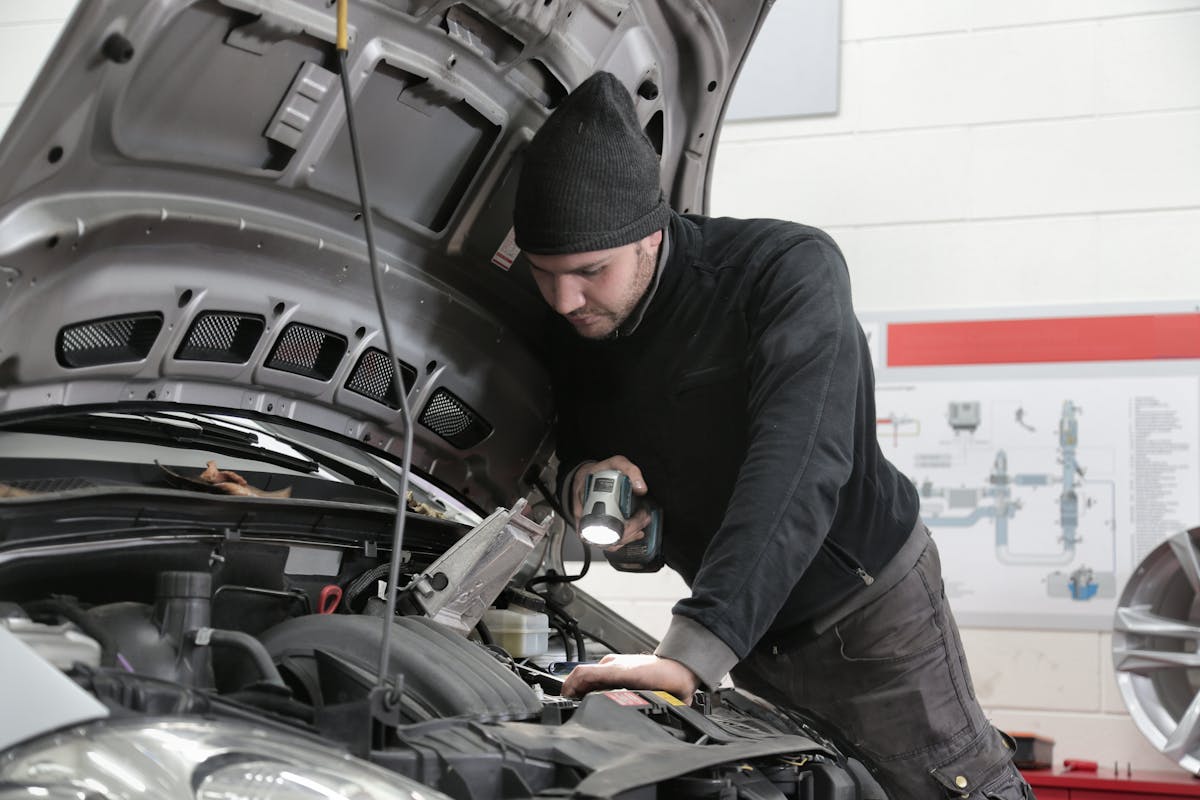
Almost every recovery-grade winch uses a series-wound DC motor. Compared to permanent-magnet motors, series-wound motors deliver far more torque under load, tolerate heat better, and handle the short, intense duty cycles a recovery winch demands. Permanent-magnet motors are still common on lighter ATV and utility winches because they draw fewer amps at low loads and cost less to build — the trade-off is overheating under sustained pulls.
Key motor specs to look at:
- Peak horsepower — 5.5–6.6 hp is typical for 9,000–12,000 lb winches.
- Amp draw — under full rated load, a 12,000 lb winch can pull 400–450 amps. See our detailed winch amp draw guide.
- Duty cycle — how long the motor can run before heat forces a cooldown. Most are rated for 1–2 minutes of continuous full-load operation.
Common motor problems — brush wear, commutator arcing, and overheating — are covered in detail in our winch motor troubleshooting guide.
The Gear Train
The gear train is the unsung hero of any winch. A motor spinning at 10,000+ RPM with modest torque is useless for pulling a 6,000 lb Jeep out of mud — so the gearbox trades speed for force. Three gearing types dominate:
- Planetary gears — the standard on nearly all modern electric recovery winches. Compact, efficient (~70–75%), relatively fast. Typical reduction: 156:1 to 260:1.
- Worm gears — old-school, often found on industrial and some truck winches. Self-locking (the drum physically can’t back-drive the motor), very durable, but slow and less efficient (~35–40%).
- Spur gears — common on lighter ATV/UTV winches. Fast, simple, but less efficient under heavy load.
Gear ratio directly determines line speed and no-load pulling smoothness — a higher ratio means more pulling force but slower rope retrieval. We break down ratios, line speeds, and how they scale with layer count in our winch gear ratios and line speeds guide.
The Drum
The drum (or barrel) is the rotating cylinder the rope winds onto. Its diameter and length look like simple specs, but they quietly drive three important behaviors:
- Pulling capacity decreases with each rope layer. Rated pull is always measured on the bare drum. Once you’ve got a few wraps of rope on top, the effective drum diameter grows — and pulling force drops, often by 20–30% by the fourth or fifth layer.
- Line speed changes too — faster with more rope spooled on.
- Drum length affects rope capacity. A short drum winch runs a shorter, fatter spool; a long drum winch runs more rope but stacks fewer layers — preserving more of the rated pull across the working length of rope.
Full drum-sizing breakdowns: our winch drum sizes guide and long vs short drum comparison.
The Brake
The brake is what keeps your vehicle from sliding back down a slope the instant you release the remote. Without it, the loaded drum would spin the motor backwards as an uncontrolled generator. Two brake types are common:
- Automatic drum brake (in-drum / cone brake) — housed inside the drum, engages automatically when the motor stops, disengages under powered rotation. Smooth and transparent to the user, but sheds heat poorly during long pulls.
- Mechanical / external brake — external band or disc brake. Better heat dissipation; more common on industrial and heavy-duty winches.
Worm-gear winches effectively don’t need a separate brake because the geometry is self-locking. Deeper dives: how a winch brake works and brake mechanism explained.
The Rope — Steel Cable vs Synthetic
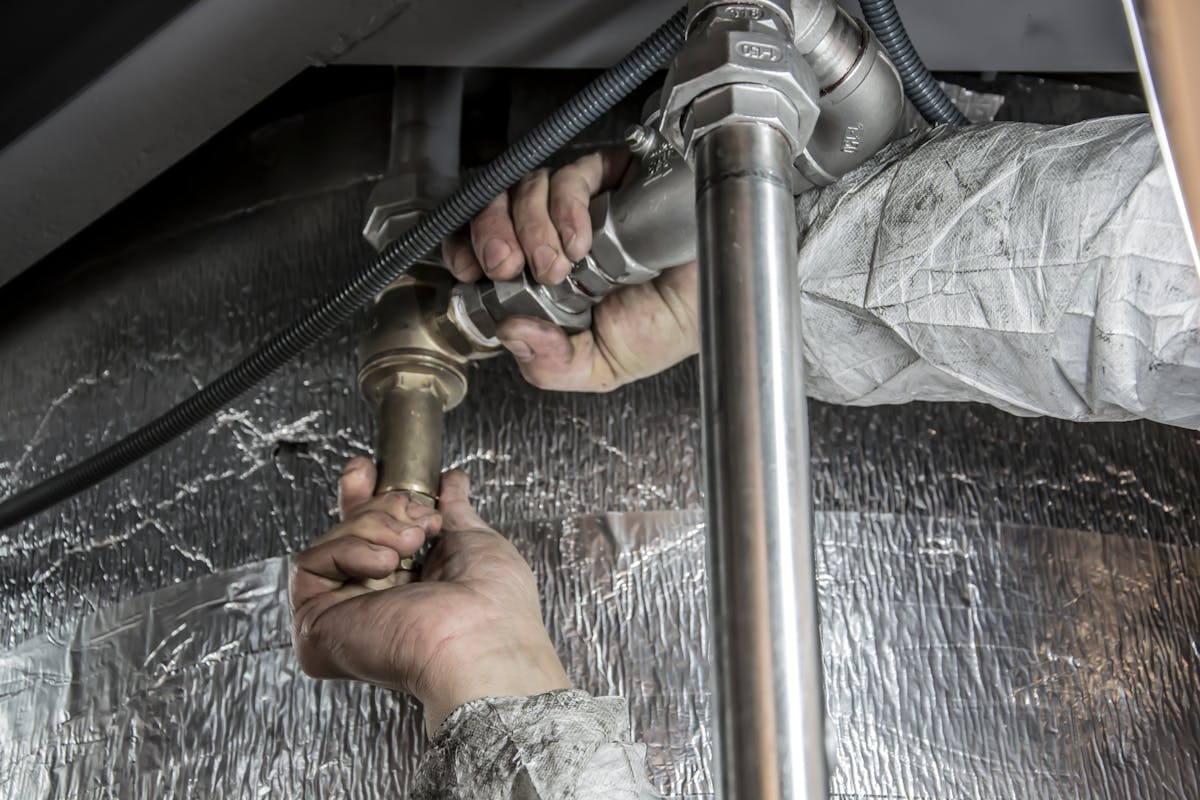
Rope choice affects safety, weight, and maintenance more than most buyers realize.
| Spec | Steel cable | Synthetic (UHMWPE / Dyneema) |
|---|---|---|
| Weight (100 ft, 3/8 in) | ~22 lb | ~4 lb |
| Behavior on break | Whips / recoils violently | Drops to the ground |
| Abrasion resistance | Excellent | Lower — needs rock-guard sleeve |
| UV / chemical degradation | Rusts without care | UV-degrades without cover |
| Cost | Low | 2–4× higher |
Diameter matters too — a 3/16″ synthetic line is dramatically different from a 1/4″ line in both rated pull and flexibility. See our 3/16" vs 1/4" winch rope comparison, our cable care and maintenance hub, and the fairlead guide (hawse for synthetic, roller for steel).
The Solenoid / Control Pack
The remote switch on your winch is a low-current trigger. The solenoid (or contactor pack) is what actually switches the hundreds of amps the motor needs — instantly, without welding contacts shut. Most modern winches use a sealed four-solenoid pack that handles both directions: two solenoids for “in”, two for “out”.
Troubleshooting symptoms: a clicking-but-not-spinning winch is almost always a stuck or burned solenoid; motor runs one way only usually means one solenoid pair failed. Full testing and wiring steps in our winch solenoid guide.
The Fairlead
The fairlead sits at the front of the winch and guides the rope smoothly in and out of the drum, even at off-center angles. Two types:
- Roller fairlead — four rollers; pair it with steel cable.
- Hawse fairlead — smooth machined aluminum opening; pair it with synthetic rope.
Mismatching rope and fairlead (synthetic on rollers, steel on hawse) accelerates rope wear dramatically. Details: winch fairlead guide.
The Hook
A standard clevis hook with a safety latch has been the industry default for decades. Many modern builders are switching to soft shackles or G100 safety hooks — both are lighter and safer under side-load. Whatever you run, the hook’s Working Load Limit (WLL) must match or exceed the winch’s rated pull.
More: our winch hook guide and tow hooks vs D-rings vs soft shackles comparison.
How Components Affect Pulling Capacity and Duty Cycle
Rated pull is a peak number on the bare drum at full battery voltage. In the real world, every component degrades that number:
- Each extra rope layer on the drum reduces effective pull (up to 30–40% on a full drum).
- Motor heat after the first 60–90 seconds of full-load pulling cuts torque significantly.
- Low battery voltage under amp load (common without a proper dual-battery setup) reduces motor output.
- A heat-soaked brake can slip slightly under sustained tension.
This is why experienced recoveries use a snatch block to double the mechanical advantage rather than relying on peak winch pull — it halves the amp draw and heat generation for the same effective force. See also our winch installation guide for wiring and battery setup that protects rated performance.
Frequently Asked Questions
What are the main parts of a winch?
An electric recovery winch has eight core components: motor, gear train, drum, brake, solenoid (control pack), rope or cable, fairlead, and hook. Hand winches and hydraulic winches share the mechanical side (gear train, drum, rope, brake) but replace the electric motor with a crank handle or hydraulic pump.
Which winch component fails most often?
The solenoid pack is statistically the #1 failure point — it handles hundreds of amps through mechanical contacts that wear and can weld shut after repeated heavy use. Motor brushes and the brake cone are distant second and third. Gear trains very rarely fail if they’re not overloaded.
Can I upgrade individual winch components?
Yes — rope, fairlead, hook, and solenoid pack are common upgrades. You can also swap a series-wound motor for a higher-output aftermarket one. Gearbox and drum swaps are generally not economical; at that point a whole new winch costs the same.
What gear ratio is best in a winch?
There’s no single best ratio — higher ratios (216:1+) give smoother heavy pulls but slower line speed. Ratios around 156:1–180:1 balance speed and force for most recovery use. Full analysis in our gear ratios guide.
Do expensive winches use better components?
Mostly yes — premium brands use sealed IP68 motors, upgraded brushes, higher-rated solenoids, and better heat management. Budget winches use the same architecture but with tighter tolerances on material quality, which shows up as shorter duty cycles and earlier solenoid failure.
How do I tell which components my winch has?
Check the manufacturer spec sheet or stamped plate on the motor housing. It will list motor type (series-wound or PM), gear type and ratio, rated line pull, and drum dimensions. If you only have the model number, the manufacturer’s website will have a full component sheet for it.
Next step: dig into the individual components with our detailed guides on the motor, gear ratios, drum sizing, the brake, and winch accessories — or start from the top with our complete winch hub.
📖 Related deep-dive: Every component above depends on clean 12V power. For picking a battery that survives winch loads, see the winch battery guide.
📖 Related deep-dive: Curious when a simple pulley outperforms a winch? Read our winch vs pulley comparison.
📖 Related deep-dive: For the ultimate hands-on understanding of these components, try our build your own winch.
🔧 Component Teardown — 4 Winches On The Bench
I’ve disassembled Warn M8000, Warn Zeon 10, Smittybilt X2O 10, and Badland Apex 12k for component inspection. Planetary gear set tolerances: Warn <0.002″ backlash, Smittybilt 0.004″, Badland 0.012″. Drum bearings: Warn uses sealed needle bearings, Badland uses bronze bushings. Both work — but the bushings need annual grease or they gall. Tolerances translate directly to longevity under load.