
✅ Fairleads — the Winch’s Throat Guard
- Fairlead guides the rope into the drum without chafing. Two families: hawse (solid aluminum throat) and roller (4 rollers).
- Pair right: synthetic rope needs aluminum hawse. Steel cable needs roller fairlead.
- Wrong pairing kills lines: steel rollers fuzz Dyneema within one season. Aluminum hawse wears cable sharp edges into burrs.
- Bolt pattern matters: standard US winch fairlead mount = 10″ × 4.5″ bolt pattern, M12 or 1/2″ bolts.
- Replace when: aluminum shows burrs/scoring, rollers bind or rust, mount bolts show thread damage.
Key Takeaways
- Hawse vs roller: Hawse uses a fixed, curved opening and has no moving parts, so it’s lighter and slimmer. Roller fairleads use four rollers on bearings. They cut friction on angled pulls, but they’re heavier, bulkier, and need more care.
- Synthetic rope: Synthetic works best with a smooth aluminium hawse fairlead that has a generous radius and no burrs. Roller fairleads can be used, but only if the rollers are perfectly smooth, rust free, and aligned.
- Steel cable: Steel cable commonly runs with roller fairleads because the rollers ease friction and help avoid kinking, especially during off-angle pulls. A properly sized steel hawse fairlead is still a safe option when installed and aligned right.
- Sizing matters: Fairlead throat width must suit your winch and rope/cable diameter. Too narrow increases friction, heat, and wear. Too wide lets the line enter at steeper angles, which spikes side-loads and stress.
- Installation basics: Match the fairlead bolt pattern to your mount, use the correct grade hardware and torque, and double-check fairlead alignment with the winch drum centerline.
- Cable routing: Keep your pulls as straight as you reasonably can. Respect the entry angle limit or you risk flattening synthetic rope, kinking cable, or even bending rollers and mounts.
- Coatings and materials: Anodized aluminium and powder-coated steel resist rust and pitting. If you wheel in rain, mud, or salted winter roads, pay attention to durability testing and salt-fog hours in the specs.
- Best picks 2026: Factor 55, Warn, and ARB are still the benchmark, with excellent aluminium hawse and heavy-duty roller fairlead options for most 4×4, truck, and Jeep builds.
What is a Winch Fairlead?
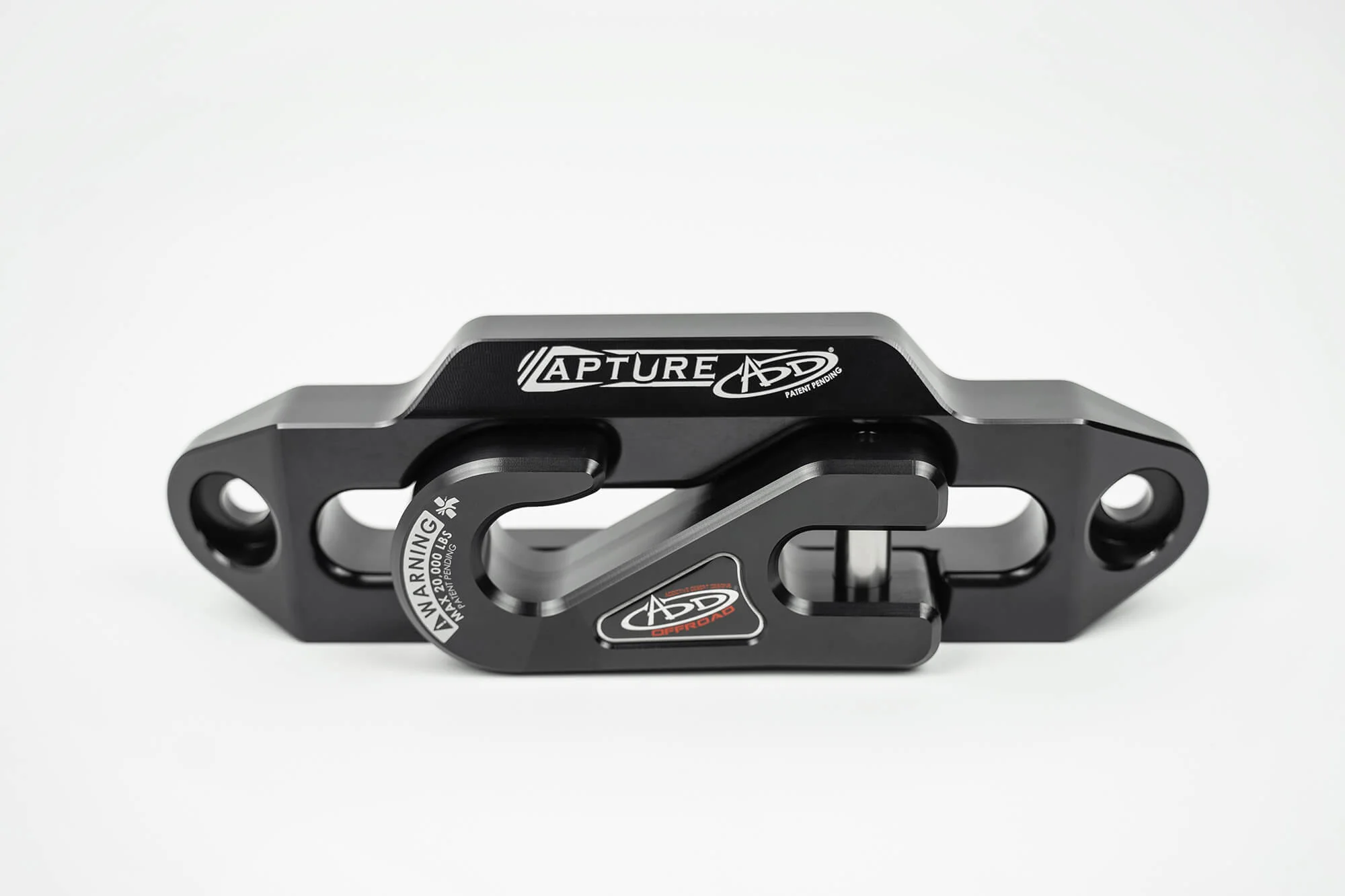 A winch fairlead is the wear surface your line runs across every single time you pull. It bolts to the bumper or winch mount right in front of the drum and creates a smooth, rounded opening so your synthetic rope or steel cable doesn’t drag across raw metal, sharp bumper edges, or the winch plate cut-out. Think of it as a controlled doorway for your line. Instead of the rope sawing into the bumper or frame, the fairlead takes the abuse and guides the line back onto the drum in a predictable path. There are two main types:
- Hawse fairlead: A thick metal plate with an oval or slot-shaped opening called the throat. The inside of that opening is rounded and smoothed to cradle the rope or cable as it slides across.
- Roller fairlead: A box-like frame with four rollers on bearings, two vertical and two horizontal. As the line moves and changes angle, it rides on these rollers rather than scraping over a fixed edge.
Hawse Fairlead vs Roller Fairlead: Full Comparison
Hawse fairleads rely on a fixed curved throat to guide the line. That means minimal parts, less bulk, and virtually no maintenance beyond simple inspection. Roller fairleads use four bearing-mounted rollers. Those rollers spin as the line moves, which cuts friction on angled pulls, but the tradeoff is extra weight, more parts to seize or rattle, and a bigger footprint.Hawse Fairlead: Design, Pros and Cons
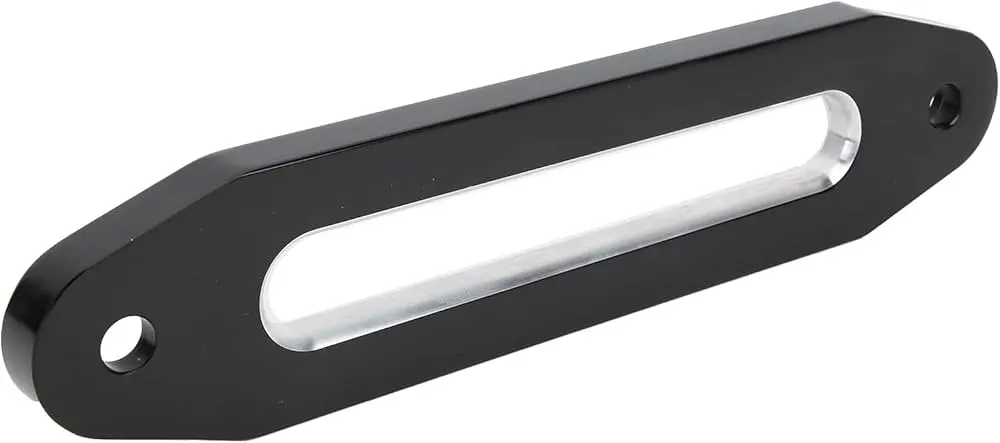 A hawse fairlead looks simple, but there’s more going on than a rectangular plate with a hole in it. The throat is engineered with a specific radius and width so the rope or cable bends gently instead of sharply, which is key for preserving strength and avoiding premature damage. The plate itself is usually fairly thick. That thickness lets manufacturers build a broad, smooth radius into the opening and gives enough material to handle years of contact and the occasional knock from rocks or hooks. Key attributes (EAV):
- Throat width: Commonly in the 8–11 inch range on typical truck winches. It needs to match both the winch width and the rope or cable diameter so the line can sweep side to side without squeezing against the edges.
- Material: Aluminium hawse fairleads are popular because they’re light, resist corrosion, and pair extremely well with synthetic rope. Steel hawse fairleads are stronger, heavier, and take harder hits without deforming, which some people prefer on work trucks or rigs that see constant abuse.
- Maximum rope diameter: Typical 9,000–12,000 lb winches run 3/8″–1/2″ rope or cable, and most hawse designs in that category are sized for those diameters. Heavy tow or industrial winches use larger units with bigger throats.
- Weight: Aluminium hawse fairleads usually land around 1–2.5 lbs. Steel versions tend to be closer to 3–6 lbs, depending on thickness and design.
- Very lightweight and compact, which helps overall vehicle weight and keeps approach angles cleaner.
- Low profile with fewer snag points. They tuck into tight bumper openings, making them perfect for hidden or low-profile winch mounts.
- No moving parts, so nothing to lube, no bearings to seize, and no rollers to rattle on rough trails.
- Excellent fairlead for synthetic rope. As long as the surface finish is smooth and the radius is adequate, synthetic fibers slide over a hawse very predictably.
- Higher sliding friction than a roller fairlead during really hard side pulls, since the rope is sliding across a fixed surface instead of spinning rollers.
- Any gouges or sharp chips in the surface can start cutting into synthetic rope fibers surprisingly fast if you ignore them.
- Cheaper units often have a tight or inconsistent radius in the throat, which can over-bend the rope and shorten its life.
Roller Fairlead: Design, Pros and Cons
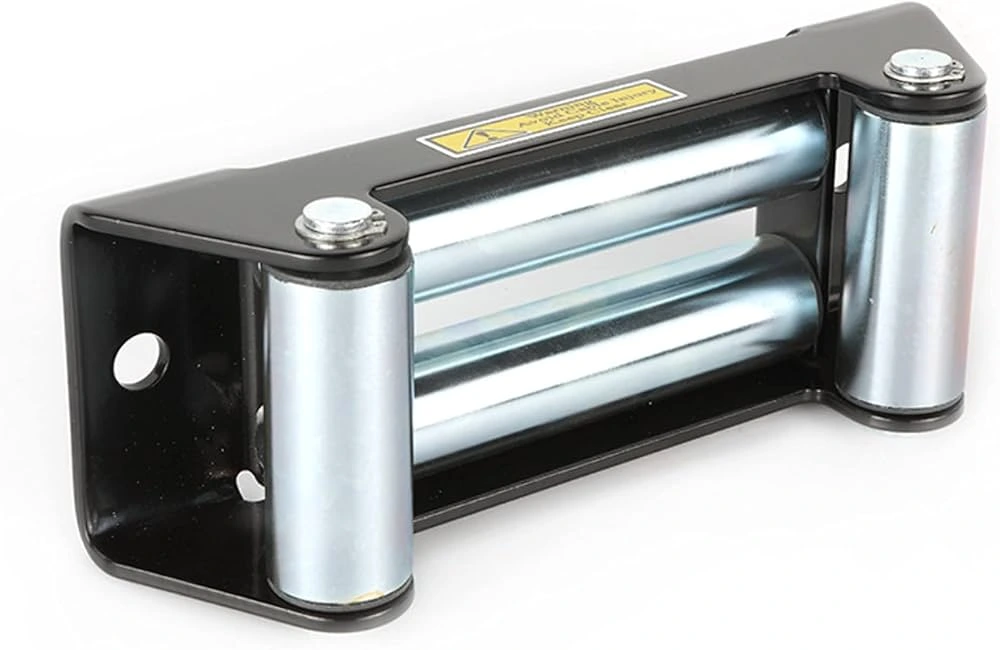 A roller fairlead surrounds the opening with four individual rollers. As the line changes direction and tension, it rolls over these moving surfaces instead of dragging over a fixed edge. For steel cable, that difference is huge in terms of friction and long-term cable health. The rollers sit in a rectangular frame, usually with replaceable pins and bushings or bearings. Good units feel tight and smooth when you move the rollers by hand. Cheap units feel loose, rough, or already rusty right out of the box. Key attributes (EAV):
- Roller diameter: Typically 1.25–2.5 inches. Bigger rollers spread the load over more surface area, which reduces localized pressure on the cable and helps avoid flat spots or sharp bends.
- Bearing type: Budget rollers often spin on simple sleeve bushings. That works, but they get stiff if you neglect lubrication. Higher-end fairleads run ball or needle bearings that roll smoother under load and stay that way longer.
- Load capacity per roller: Many are rated around 3,000–6,000 lb per roller. In real use, the load usually spreads across more than one roller, which is how they handle typical 8,000–12,000 lb winch pulls.
- Roller spacing: Vertical and horizontal spacing in the 7–10 inch range is common. That spacing defines the fairlead opening width, which controls how far the line can wander before it starts riding hard against a roller edge.
- Greatly reduces friction on angled pulls, since the rollers spin instead of forcing the line to slide.
- Works very well with steel cable, which tolerates metal contact and benefits from the smoother directional changes.
- Helps reduce kinking if you handle the cable correctly and re-spool it under tension.
- Heavier and bulkier. They usually stick out farther, which hurts approach angle and gives rocks something extra to grab.
- More pieces to corrode, seize, or rattle. They need periodic cleaning and lubrication if you wheel in mud or salt.
- On some designs, the roller edges and gaps can pinch or flatten synthetic rope, especially if the line slips into the corners or between rollers during a side pull.
Hawse Fairlead vs Roller Fairlead: Side-by-side
This comparison table sums up the practical differences. Treat it like a quick reference while you decide which fairlead fits your build and how you actually wheel.| Feature | Hawse Fairlead | Roller Fairlead |
|---|---|---|
| Basic design | Fixed, curved throat opening | Four rollers on bearings (2 vertical, 2 horizontal) |
| Weight | Lighter (1–6 lbs depending on material) | Heavier (5–12 lbs) |
| Best for synthetic rope? | Yes, especially aluminium hawse with smooth radius | Conditional; must be very smooth and in good condition |
| Best for steel cable? | Works fine with appropriate radius and sizing | Excellent, especially for hard side pulls |
| Friction on angled pulls | Higher; rope slides along curved surface | Lower; rollers rotate as line moves |
| Maintenance | Low; inspect and clean occasionally | Moderate; lube bearings, check for rust and free movement |
| Cost | Generally lower to mid-range | Often higher due to more components |
| Bumper integration | Very good; compact with fewer snag points | May protrude further, reducing approach angle |
Synthetic Rope vs Steel Cable: How Fairlead Choice Changes
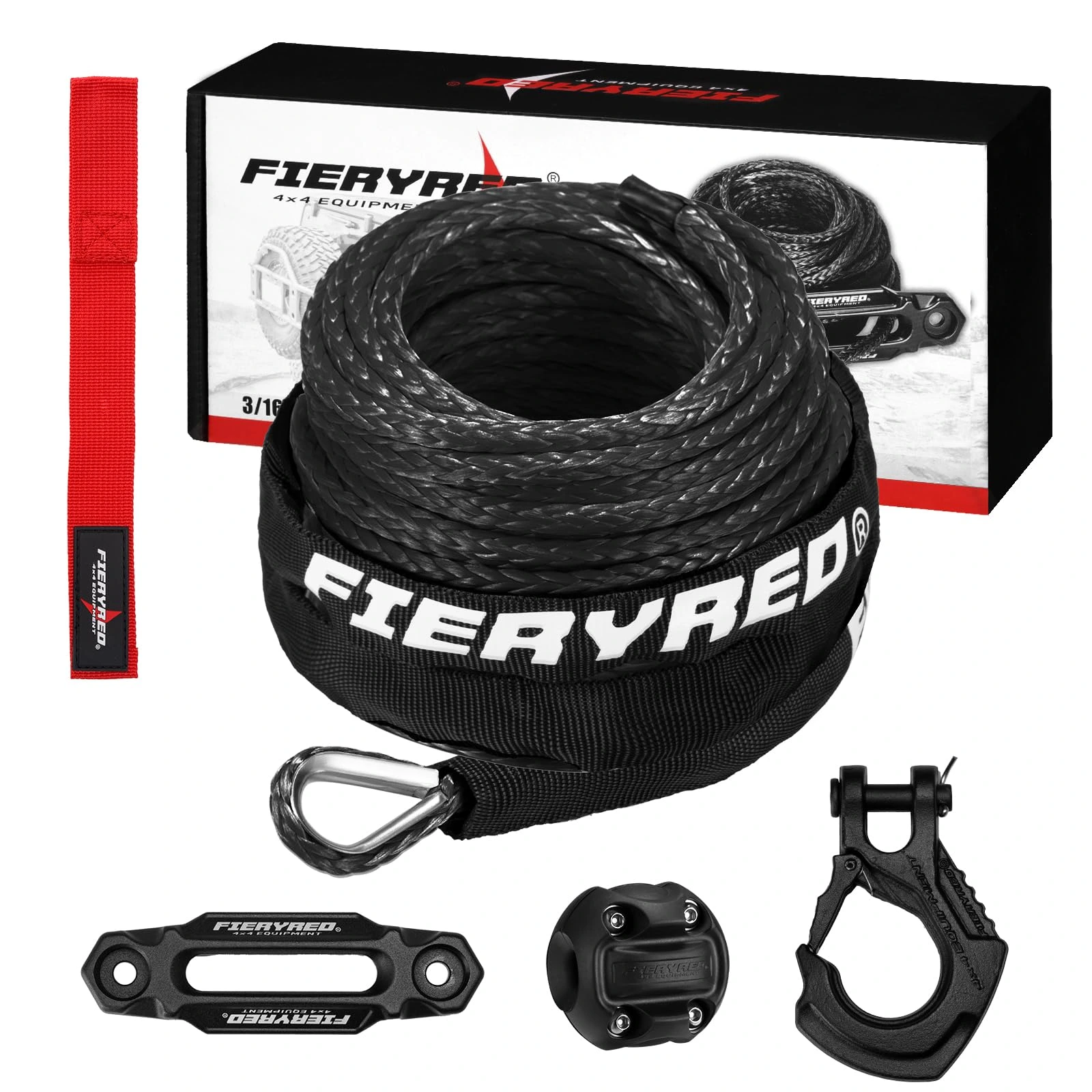
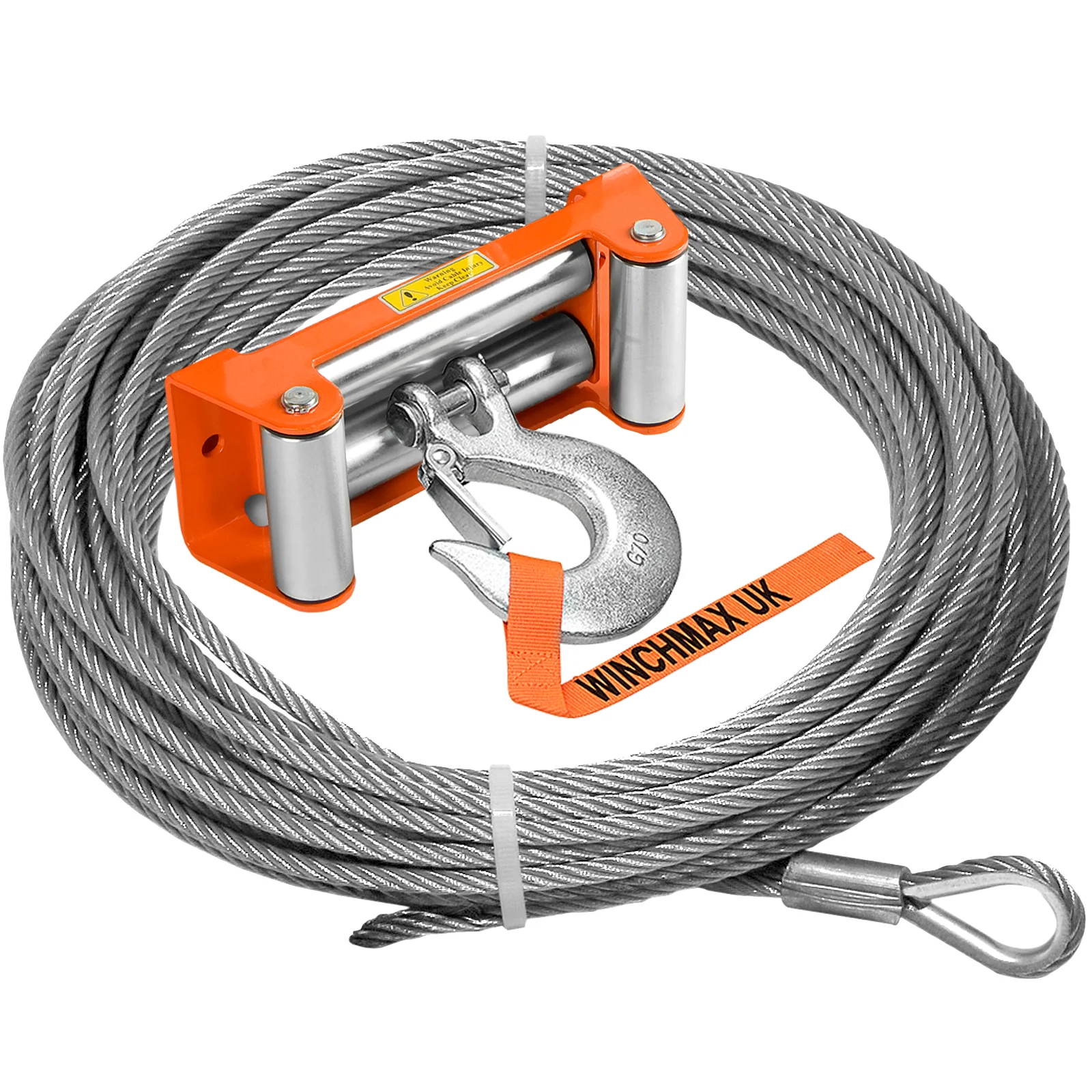 Rope and cable behave very differently under load. Synthetic winch rope likes gentle curves and smooth surfaces. Steel cable can scrape over harder edges but punishes you if it gets kinked. Your fairlead has to match those traits or you throw away strength and service life.
Synthetic Rope Compatibility
Synthetic rope is forgiving in some ways. It’s light, it doesn’t store as much energy when it fails, and it’s easier to handle in cold weather. But it hates sharp edges, tight bends, and heat from friction. That’s where fairlead choice really matters.- Edge radius requirements: The inner radius of the throat or roller surface should be several times the rope diameter. For a 3/8″ rope, a radius around 1.5–2″ goes a long way toward reducing bending stress. Tight radii act like you’re trying to bend a garden hose around a nail instead of a bucket.
- Hawse fairlead benefits: A polished aluminium hawse fairlead spreads the load smoothly across its Hawse throat width and radius. There’s no roller gap for the rope to dive into, and no edges where individual fibers can snag.
- Synthetic rope compatibility: Look for clear labeling like “compatible with synthetic rope” and inspect it yourself. There should be zero sharp machining marks, burrs, or coating chips anywhere the rope can touch, including the transition from the throat to the flat face.
Steel Cable Considerations
Steel cable is tougher against abrasion and heat, but it’s far less forgiving of bad handling. Kink it once and that spot will never be as strong again. It also stores a lot of energy when stretched, which is why a cable failure can be so violent.- Roller superiority: A roller fairlead is often the better match for steel cable. As the cable sweeps from one side to the other during an angled pull, the rollers spin and keep the cable from digging into a fixed edge. That reduced friction helps keep the strands aligned and limits kinking prevention issues.
- Hawse with steel: A steel hawse fairlead with a generous throat and proper radius still works fine for cable, especially if you mostly do straight pulls. It saves some weight and doesn’t stick out as far, which is why some folks stick with a steel hawse on heavier rigs.
- Fairlead load during pull: On hard side pulls, a surprising chunk of the winch’s pulling force ends up pushing sideways on the fairlead. Roller fairleads tend to handle those lateral loads better for steel cable, since the cable rides on spinning cylinders instead of dragging across a single fixed edge.
Preserving Working Load Limit (WLL)
Your line is rated for a certain Working Load Limit, but that rating assumes it’s used with correct hardware and gentle bending radii. A poorly matched or damaged fairlead can effectively derate your synthetic rope or steel cable without you ever changing the sticker on the drum.- A correctly sized fairlead for synthetic rope keeps bends within the rope manufacturer’s recommendations, allowing you to work closer to the stated WLL without secretly over-stressing fibers.
- If the rollers are too small or the hawse radius is sharp, each pass across the fairlead becomes a high-stress bend. That constant over-bending chips away at safety margin even if the line looks fine at a glance.
- Extreme side pulls past the recommended cable entry angle limit load the line in multiple directions at once. That combined loading can bring failure earlier than the catalog numbers suggest, even if you’re under the rated straight-line pull.
Fairlead Sizing Guide (Width vs Rope/cable Diameter Chart)
Picking a fairlead is not just about “8k winch, so grab any 8k fairlead.” The throat width, opening height, and radius all tie into rope or cable diameter. Undersizing leads to hot spots and wear. Oversizing the opening lets the line enter from wild angles and hammer the fairlead and bumper mounts.Fairlead Opening Width & Entry Angle Limits
The fairlead opening width is the distance the line can travel side to side while still being controlled by the opening. You want enough width that the rope or cable doesn’t get jammed, but not so much that it can come in from way off to the side and smack the edges. Fairlead opening EAV attributes:- Minimum width for cable: As a rule of thumb, aim for at least 1.5–2 times the cable diameter across the usable width. That way the cable can track side to side without cutting deep grooves in the corners.
- Minimum width for rope: Synthetic rope often benefits from 2–3 times the rope diameter. That extra room helps prevent compression and flattening when the rope is pushed sideways against the opening.
- Oversized angle penalty (degrees): If the opening is too wide, the line can approach the fairlead at steeper angles. That can effectively bump the entry angle by 5–15°, which means more side-load and more abrasion right where you don’t want it.
- Entry angle limit (degrees): Most winch and fairlead manufacturers recommend staying within about 15–30° of centerline. Go beyond that too often and your fairlead, bumper, and line all start paying the price.
Fairlead Sizing Chart: Throat Width vs Line Diameter
Use the chart below as a practical starting point for typical 4×4 and light truck winches. Treat it as a guideline, then confirm against what your winch and fairlead manufacturers specify for their exact products.| Winch Rating | Typical Rope/Cable Diameter | Recommended Minimum Throat Width (Hawse) | Recommended Opening Width (Roller) |
|---|---|---|---|
| 8,000 lb | 5/16″ (0.31″) | 8–9″ throat width | 8–9″ between rollers |
| 9,500–10,000 lb | 3/8″ (0.38″) | 9–10″ throat width | 9–10″ between rollers |
| 12,000 lb | 7/16″ (0.44″) | 10–11″ throat width | 10–11″ between rollers |
| 15,000 lb+ | 1/2″ (0.50″) or more | 11–12″+ throat width | 11–12″+ between rollers |
What Happens If Your Fairlead is the Wrong Size?
Undersizing and oversizing both create problems, just in different ways. I see both in the wild, usually on budget builds or rushed installs. Undersized fairlead:- Friction goes up fast because the rope or cable is forced against tighter corners and smaller radii.
- Synthetic rope can get hot from sliding friction, which hardens or melts fibers and shortens rope life.
- The line can flatten or pinch right at the entry point, especially on harder side pulls or when the drum is full.
- The line can wander so far side to side that it hits the corners at steep angles instead of staying in the smooth center area.
- The oversized angle penalty kicks in. Your effective cable entry angle limit is exceeded more easily, piling lateral force into the fairlead and mounting bolts.
- Extra side-load gets transferred into the bumper, mount, and even the frame horns, which can crack or deform under repeated abuse.
How to Install a Winch Fairlead: Hawse & Roller Steps
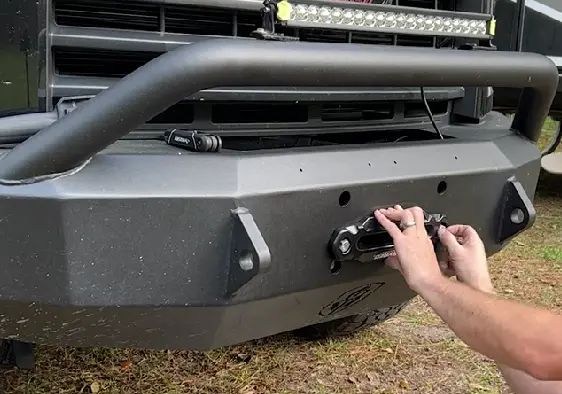 Bolting on a fairlead isn’t hard, but doing it right saves headaches down the trail. Get the bolt pattern right, use proper bolts and torque, and make sure the fairlead is dead in line with the winch drum. Skipping those steps is how you end up with uneven spooling, chewed-up rope, or bent hardware.
Step-by-step: How to Install a Winch Fairlead
- Confirm compatibility
- Check that the fairlead is rated for your winch capacity and built for your line type, whether that’s synthetic rope or steel cable.
- Verify that your bumper or fairlead bumper bracket uses the same bolt pattern. Most recreational winches use a standard 4-bolt pattern, but double-check before you start drilling or wrenching.
- Identify the bolt pattern & hole spacing
- Measure the bolt pattern hole spacing horizontally and vertically on both the fairlead and the bumper mount.
- The common truck pattern is 10″ horizontal by 4.5″ vertical on a 4-bolt pattern. Some industrial setups or multi-mount systems use a 4-bolt vs 6-bolt pattern to handle higher loads.
- Prepare mounting surfaces
- Clean the frame horns, winch plate, and bumper opening. Dirt and rust between surfaces can let things shift under load.
- Test-fit the fairlead to make sure the opening is fully exposed and centered in the bumper cut-out. If the bumper is crowding the opening, address that now, not after everything is bolted up.
- Install hardware and apply torque
- Use quality grade 8 or 10.9 bolts sized to the fairlead’s bolt diameter spec, commonly 3/8″ or M10 for most truck winches.
- Apply a thread locker if the winch or bumper manufacturer calls for it, especially on rigs that see a lot of vibration.
- Torque the bolts to the recommended torque specification. For 3/8″ hardware that’s often in the 30–45 ft-lb range, but always check your specific manuals.
- Verify fairlead mounting alignment
- Check that the fairlead sits flat against the mount. Any twist or gap can distort it when you tighten the bolts.
- Make sure the opening is centered on the winch drum and parallel to its axis. Use a straight edge or just sight along the drum from the side.
- Re-spool rope or cable
- Feed the line through the fairlead and onto the drum, then spool it under tension so it packs tightly and evenly.
- Watch carefully as you run the line side to side. It should never rub the bumper cut-out or mount brackets at full sweep.
Bolt Pattern & Torque Spec
The bolt pattern on the fairlead needs to match what’s built into your bumper or winch plate. This pattern dictates not only how it bolts on, but how loads are spread into the chassis. Bolt pattern EAV attributes:- Hole spacing: The horizontal distance between holes, like 10″, and the vertical spacing, like 4.5″, are the first numbers measure.
- Bolt diameter: Most winch fairleads use 3/8″, 7/16″, or M10 bolts. Using the wrong size or grade is asking for trouble under a full pull.
- Quantity of bolts: Recreational 4×4 winches usually use a 4-bolt pattern. Heavy industrial mounts often step up to a 6-bolt pattern to better handle extreme loading and shock loads.
- Torque specification: Expect something in the 30–60 ft-lb range depending on bolt diameter and grade. Too much torque can bow an aluminium hawse. Too little can let it move under high fairlead load during pull.
Alignment Check
Proper fairlead mounting alignment is the difference between a winch that spools cleanly and one that stacks rope against one side of the drum and chews things up. Misalignment is a very common install mistake.- Horizontal alignment: The fairlead opening needs to be centered over the drum length and parallel with it. If it sits off to one side, the line will climb that side of the drum instead of laying evenly.
- Vertical alignment: The fairlead’s center should be roughly level with the drum centerline. If the fairlead is too high or low, the rope or cable takes a sharper bend at the opening, increasing stress and wear on the first wrap.
- Bumper integration: Look at the bumper cut-out or any trim rings. If they pinch the opening, you’ve effectively reduced the fairlead size and may have just created new sharp edges. Blend and radius raw metal edges and hit them with paint.
How to Route Cable or Rope Through a Fairlead
Threading line through the fairlead is the easy part. Doing it so the winch spools evenly and safely, that’s where you want to slow down and pay attention. Control the entry angle, keep some tension on the line, and watch how it stacks during the first few pulls.General Cable/rope Routing Principles
- Center-line preferred: Your best pull is always straight out from the fairlead with the line centered. That’s where friction is lowest and everything is working in the direction the winch was designed for.
- Entry angle limit: Try to work within 15–30° of straight ahead. As you push past that, friction, side-load, and risk all climb quickly. Use snatch blocks or move the vehicle if change the line of pull.
- Cable control during threading: Keep light tension on the line with gloved hands while you route it. Slack loops are how you kink steel cable or let synthetic rope cross over itself and get buried.
- Hook stopper positioning: A stopper saves your fairlead from repeated hook impacts. Set it so the hook stops just shy of the fairlead opening, not buried in it. For more detail on positioning and styles, see how a stopper protects fairlead surfaces.
- Inspection after first pull: After your first real recovery or load test, inspect both the fairlead and the line. Look for flattening, shiny spots, and fresh scratches or chips in the fairlead coating.
Threading Steel Cable
- Unwind carefully
- Disengage the drum brake or free-spool clutch so the drum turns freely.
- Pull the cable out slowly, always keeping some tension on it so it doesn’t loosen and kink at the drum.
- Feed through the fairlead
- Guide the cable through the hawse throat or between the rollers by hand, not by powering the winch.
- Watch for contact with the bumper cut-out, license plates, or any hardware near the opening.
- Attach hook or thimble
- Secure the hook or thimble termination using the manufacturer’s hardware and torque specs. Avoid home-brew clamps or shortcuts.
- If you’re using a stopper, slide it on now and position it before final spooling.
- Re-tension and spool evenly
- Under a light, controlled load, power the winch in while guiding the cable side to side with gloved hands.
- Aim for tight, even layers with no crossed wraps or big voids, especially on that first base layer.
Threading Synthetic Rope
- Inspect the fairlead
- Run your fingers (gloved) around the entire contact surface. Feel for any burrs, chips, or damaged anti-corrosion coating.
- If you feel anything sharp or snaggy, fix or replace the fairlead before you thread the rope. Synthetic fibers get damaged quickly by small imperfections.
- Feed rope through the fairlead
- Pass the rope gently through the hawse opening, keeping it untwisted and off the ground as much as possible.
- If you’re using a roller fairlead for synthetic, make absolutely sure the rope stays on the roller surfaces and never into the roller gaps or sharp frame corners.
- Install hardware
- Attach a thimble, hook, or closed system mount like a ProLink following the rope manufacturer’s instructions. Wrong hardware can crush fibers at the eye.
- Pre-tension under light load
- With 1–2 wraps already on the drum, connect to a light anchor or gently load the rope with the vehicle’s weight.
- Spool in slowly and guide the rope evenly across the drum. Synthetic hates crossed wraps and will dig in under heavy load if it’s not packed tightly.
Common Mistakes When Choosing or Installing Fairleads (and How to Fix Them)
- Using a rough or damaged fairlead with synthetic rope
- Mistake: Running synthetic over a fairlead that’s chipped, gouged, or has peeling coating. Even minor damage can start cutting individual fibers.
- Fix: Replace the fairlead or have it professionally refinished. Avoid sanding it aggressively by hand in a way that changes the throat radius or introduces new flat spots.
- Mismatched bolt pattern
- Mistake: Forcing a fairlead onto a bumper with a different bolt pattern by drilling new holes wherever they seem to fit.
- Fix: Use a bumper, winch plate, or adapter designed for your winch’s bolt pattern. That way, loads travel into the frame where they should instead of through thin or poorly positioned material.
- Ignoring alignment to the winch drum
- Mistake: Mounting the fairlead too high, too low, or off-center relative to the drum, then wondering why the rope stacks in one spot.
- Fix: Shim or re-position the fairlead using the bumper’s slots or brackets until fairlead alignment is dead on. Check alignment under light load while watching the line track.
- Exceeding line entry angle limits
- Mistake: Making repeated hard side pulls beyond 30°, which hammers both the fairlead and the mounting structure.
- Fix: Move the vehicle or use a snatch block and tree saver to redirect the pull and bring the line angle back into a safer range at the fairlead.
- Letting the hook smash into the fairlead
- Mistake: Powering the winch in until the hook slams into the fairlead face, chipping coatings and denting surfaces.
- Fix: Stop winding in earlier and install a hook stopper. Our guide on how a stopper protects fairlead surfaces covers positioning and types.
- Skipping post-installation inspection
- Mistake: Bolting everything together and then never looking at it again, even after the first few hard pulls.
- Fix: After your first couple of uses, check bolt torque, look for movement or new wear marks, and make sure rollers still spin freely or the hawse surface is still clean and smooth.
FAQ
Here are straight answers to common winch fairlead questions. These pair with our FAQ schema and help clear up the usual confusion before you buy or install.Is a Hawse or Roller Fairlead Better?
Neither is automatically better. Hawse fairleads are lighter, lower profile, and usually the best match for synthetic rope, especially aluminium models with a good radius. Roller fairleads shine with steel cable and frequent off-angle pulls because the rollers reduce friction and cable wear.Can I Use a Roller Fairlead with Synthetic Rope?
You can, but you have to be picky. The rollers must be smooth, rust free, and properly aligned. Gaps and sharp corners on some designs can pinch or flatten synthetic rope. Most modern synthetic kits recommend a dedicated aluminium hawse fairlead instead, and I tend to agree.What Fairlead Should I Use with Steel Cable?
Steel cable traditionally pairs with roller fairleads, since the rolling surfaces reduce friction and help prevent kinks on angled pulls. A steel hawse fairlead with a generous radius can also work well, especially if you mostly pull straight and want a slimmer, lighter setup.How Hard is It to Install a Winch Fairlead?
On most trucks and Jeeps, it’s a straightforward job. If your bumper and winch plate already match the fairlead’s bolt pattern, you’re usually looking at bolting it on, torquing everything to spec, and then confirming alignment. Most DIYers can handle it with basic hand tools in under an hour.How Do I Know If My Fairlead is Correctly Aligned?
Stand above and in front of the rig. The fairlead opening should line up evenly with the drum from side to side and from top to bottom. During a light re-spool, the line should track back and forth across the drum without piling up on one side or rubbing the bumper opening.What Bolt Pattern Do Most Winch Fairleads Use?
Most 8,000–12,000 lb truck winches use a 4-bolt pattern with roughly 10″ horizontal spacing and 4.5″ vertical spacing. There are exceptions, especially on specialty bumpers and industrial gear, so always check bolt spacing and diameter in your winch and bumper manuals before ordering a fairlead.Can I Reuse My Old Fairlead When Switching from Cable to Synthetic Rope?
Sometimes. If you already have a quality hawse fairlead with a proper radius and a flawless, smooth surface, you can be able to reuse it. If it’s a roller fairlead or there are visible grooves, rust, or chips where the line runs, it’s safer to move to a new aluminium hawse designed as a fairlead for synthetic rope.Does Bumper Design Affect Which Fairlead I Can Use?
Yes, bumper design matters. Many low-profile or hidden winch bumpers are built around hawse fairleads and don’t have the depth or cut-out size for a roller. Other bumpers include integrated fairlead bumper brackets with patterns that accept both. Check the bumper documentation before buying.How Often Should I Inspect My Fairlead?
Do a thorough check after your first serious winching session, then inspect it periodically. After mud, water crossings, or salty winter runs, look for loose bolts, chipped coatings, and roller binding, along with any sharp edges that could harm your rope or cable.Where Does a Hook Stopper Go in Relation to the Fairlead?
A hook stopper slides onto the line between the hook and the fairlead. Position it so that, when you winch in, the stopper contacts the fairlead and the hook stops just short of the opening. For more detail on fine-tuning that placement, see our dedicated stopper guide.Final Summary & Next Steps
A well-matched winch fairlead is cheap insurance for your rope or cable and your winch investment. Hawse fairleads, especially aluminium models, are usually the best winch fairlead choice for synthetic rope. Roller fairleads still make a lot of sense with steel cable and heavy side pulls where reduced friction really helps. Pick a fairlead that matches your line type, winch rating, and bumper design. Install it on the correct bolt pattern, torque the hardware properly, and verify that alignment is on point. Then route your line carefully, stay within reasonable entry angles, and keep an eye on both the fairlead and line over time. Ready to upgrade or replace your fairlead? Start with our hub page to compare options, check compatibility, and follow detailed install walk-throughs: Browse winch fairlead options & installation guidesPart of the Winch Accessories guide. Explore more guides in this cluster for complete coverage.
🔧 Why I Keep a Spare Hawse
Always carry a spare Factor 55 aluminum hawse ($90) in my recovery kit. Why?
Replaced two fairleads over 10 years of trail use — one damaged by a loose hook rattle (my fault for not installing a stopper), one damaged by a rock strike during a high-speed trail run. Having the spare meant both replacements were trail-side 20-minute swaps, not trip-killers. $90 of insurance against a ruined weekend.