

✅ Winch Battery — Size, Type, Setup
- Battery must deliver sustained high current. A 12k winch pulls ~400 A at stall. Starter batteries rated for 5-sec CCA, not winch duty.
- AGM is the standard. Odyssey 65-PC1750T, Northstar NSB-AGM31 handle deep discharge + high current without damage.
- Dual-battery setup recommended for 12k+ winches: primary AGM + secondary AGM + Blue Sea isolator.
- LiFePO4 limitations: most BMS limit peak current to ~500 A. Works for short pulls; underperforms on sustained loads.
- Cold weather: flooded loses 50% at 0°F, AGM only 20%. Lithium needs heaters below 30°F. AGM wins cold-weather winching.
Key Takeaways
- Best battery for most winches: A high-CCA AGM battery (Optima, Odyssey, or similar) with solid amp-hour and reserve capacity ratings. Think strong starting battery that also has the stamina for recovery work.
- AGM vs lithium winch battery: AGM is rugged, simple to integrate with factory systems, and affordable. LiFePO4 is light and lasts a long time in cycles, but it costs more, needs a good charger/BMS, and can be temperamental in serious cold.
- Battery sizing: Match battery CCA and Ah to your winch’s stall amp requirement and your alternator output. Big winches (9,500–12,000+ lbs) really wake up with 800–1,000+ CCA on tap.
- Does a winch drain a battery? Yes, very fast. A heavy recovery can chew through a normal automotive battery in minutes. Your alternator is just playing catch-up and will never match peak winch draw in real time.
- Dual batteries for winching: Smart idea for frequent or long pulls, overlanding setups, and rigs with lots of electrical gear. Needs a proper dual battery isolator relay or a system like REDARC so you do not kill your starting battery.
- Deep cycle vs starting: Deep cycle puts up with deeper discharges but usually has lower CCA. For one-battery systems that must crank and pull, look for high-CCA AGM “dual-purpose” models.
- Battery charger only? A 10–15A charger is not a power source for a winch. Even big shop chargers only assist the battery. They do not replace it.
- Maintenance matters: After any heavy recovery, get the battery fully topped off, shield it from brutal heat or deep cold, and stay ahead of corrosion and loose connections so you do not fight voltage sag or kill the battery early.
What Is a Winch Battery?
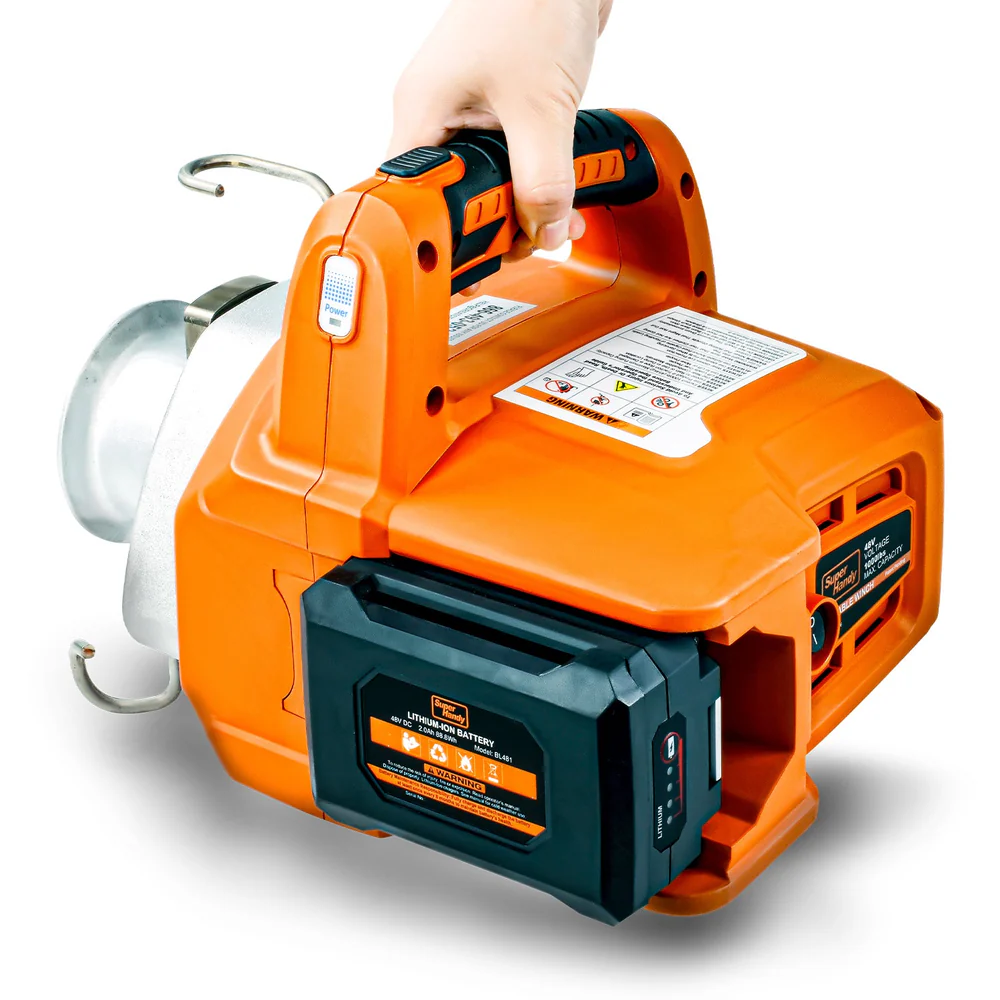 A winch battery is simply the 12V (sometimes 24V) battery you rely on to run an electric winch. The difference from a basic starting battery is the abuse it takes. It has to deliver very high current, often hundreds of amps, for short bursts without dropping voltage so far that the winch crawls or stalls. The big specs to care about are cold cranking amps (CCA), amp-hour (Ah) capacity, and reserve capacity (RC), along with the chemistry type such as AGM, deep cycle, or LiFePO4 lithium.
What Type of Battery Does a Winch Need? (AGM vs Lithium vs SLI)
A winch wants a battery that can dump a whole lot of amps instantly without the voltage crashing. That means plenty of CCA, decent Ah / RC, and a design that does not shake itself to death off-road. In 2026, the three main styles people use are AGM (absorbed glass mat), LiFePO4 lithium iron phosphate, and traditional SLI (starting, lighting, ignition) flooded batteries. Here is the short version in plain language: Answer: Most winches behave best on a high-CCA AGM battery. AGM is sealed, low maintenance, and handles big current surges reliably. LiFePO4 is lighter and lasts more cycles but costs more and needs proper BMS/charging gear. Basic flooded SLI batteries work, but they are less forgiving if you keep pushing the winch hard.AGM, LiFePO4 & SLI: Quick Definitions
AGM battery (Absorbed Glass Mat): This is a sealed lead-acid design where the acid is held in fiberglass mats instead of sloshing around. In real use, that means maintenance-free operation, very good vibration resistance, high CCA, and better cycle life than cheap flooded batteries. A lot of serious wheelers run AGM for that reason. LiFePO4 lithium (Lithium Iron Phosphate): This lithium chemistry is built for safety and longevity. You get a lot of usable capacity, outstanding cycle life, and very low weight compared to lead. The tradeoffs are higher price, the need for a BMS to control current and protect cells, and the requirement for a compatible charger or DC-DC system to treat it right. SLI (Starting, Lighting, Ignition) flooded battery: This is the old-school wet lead-acid battery that came in most vehicles from the factory. It has good starting punch and works fine for mild use. Under deep discharges and off-road vibration it tends to lose plates, shed material, and die earlier than AGM if you ask it to winch a lot.AGM vs Lithium vs Flooded for Winching (Comparison Table)
The table below lines up typical numbers for common 12V batteries in winch duty. These are ballpark ranges, not brand-specific promises, but they give you a realistic feel for how each chemistry behaves with a winch.| Battery Type | Typical CCA / Peak Amps | Ah Capacity (12V group 34–31) | Reserve Capacity (RC, minutes) | Cycle Life (to ~80% capacity) | Weight | Relative Cost | Winch Suitability |
|---|---|---|---|---|---|---|---|
| AGM (12V) | 700–1,200 CCA | 55–100 Ah | 120–200+ min | 300–600 cycles | 45–75 lbs | $$ | Excellent: high CCA, good recovery from deep pulls, tough under winch loads |
| LiFePO4 (12V) | “CCA-equivalent” 500–1,000A (via BMS) | 50–100 Ah usable | Not rated like lead-acid; high usable capacity | 2,000–5,000+ cycles | 20–35 lbs | $$$–$$$$ | Very good with correct BMS & wiring; must respect cold-weather and BMS limits |
| Flooded SLI | 500–900 CCA | 45–80 Ah | 90–150 min | 200–400 cycles | 40–60 lbs | $ | Acceptable for light or occasional use; weaker against deep discharge and vibration |
Which Type Is Best for You?
Choose AGM if:- You want a plug-and-play upgrade that drops into the stock location and works with your OEM charging system without drama.
- You do moderate winching like trail recoveries, self-recovery in snow, or loading a car hauler a few times a month.
- You want strong CCA, solid reserve capacity, and decent life without messing with custom chargers, BMS settings, or special wiring.
- You care a lot about low weight and extremely high cycle life. Think overlanding rigs with fridges, lights, and solar where the battery cycles daily.
- You are willing to install a proper lithium-compatible charger or DC-DC unit and understand BMS limits, especially how it behaves below freezing and at high current.
- You run a dual battery setup where lithium carries the house loads and helps with winching, while a conventional lead-acid battery still handles engine starting.
- Your budget is tight, you only winch once in a while, and replacing a battery a little sooner does not scare you.
- You are fine doing more frequent checks on water level and accepting less abuse tolerance under deep discharge.
How to Size Your Winch Battery (CCA, Ah & Reserve Capacity Guide)
Understanding Key Battery Specs: CCA, Ah, RC
Cold Cranking Amps (CCA): This is how many amps a battery can push at 0°F for 30 seconds while still keeping at least 7.2V. In real life, more CCA means stronger short-burst muscle for starting and for that first hard hit on the winch. Amp-Hour (Ah) Capacity: This describes how much total energy is stored. A 70 Ah battery can, in perfect lab conditions, run 3.5 amps for 20 hours at 77°F. Winching is nothing like those lab conditions. With very high current, Peukert’s effect kicks in and the effective Ah you can pull before the voltage falls off is much lower. Reserve Capacity (RC): RC tells you how many minutes a fully charged battery can supply 25A at 80°F before dropping to 10.5V. It is a better real-world clue to how long your lights, accessories, and winch can run before you are in trouble. Higher RC usually means more lead, thicker plates, and a better buffer.Step 1: Look Up Your Winch’s Stall Amp Requirement
Every winch has a published stall amp requirement. That is how many amps it draws when pulling at its rated line pull and the drum stops turning. Actual numbers vary by brand, but for 12V winches you usually see something like:- 2,500 lb winch: around 150–200A at stall
- 8,000–9,500 lb winch: around 350–450A at stall
- 12,000 lb winch: around 400–500A at stall
- 15,000–17,500 lb winch: around 450–600A or more at stall
Step 2: Match CCA to Winch Size & Vehicle
A simple way to think about CCA is this: the heavier the rig, the bigger the winch, and the colder your climate, the more CCA plan on.- Small ATVs / UTVs (2,500–4,500 lb winches): Around 300–500 CCA usually does the job unless you are repeatedly buried in deep mud.
- Jeeps / mid-size trucks (8,000–10,000 lb winches): A sensible target is 700–900 CCA. The winch response is noticeably better in this range.
- Full-size trucks / heavy rigs (12,000–17,500 lb winches): Aim for 800–1,100+ CCA, often backed up by dual batteries, especially if you wheel in the cold.
Step 3: Ensure Enough Ah & RC for Your Use
A lot of people look at a “70 Ah” sticker and think they can just divide by the winch draw and do the math. That is not how it works in the real world. Under high winch loads, internal resistance in the battery rises, voltage drops, and due to the battery discharge curve and Peukert effect, usable capacity shrinks fast. For a single primary battery that has to start and winch, these are realistic minimums:- Minimum 60 Ah / 120 RC minutes for light truck/Jeep winching, infrequent short pulls.
- 70–90 Ah / 150–200 RC minutes for folks who recover often, tow, or run bigger winches in the 8k–10k range.
- 90+ Ah / 180+ RC minutes or a solid dual battery setup for 12,000+ lb winches on heavy overland or work rigs.
Rule of Thumb Chart by Winch Capacity
Use this winch battery size guide as a practical starting point. It assumes a healthy charging system and typical off-road use on a 12V setup.| Winch Capacity (lbs) | Typical Stall Amps @ 12.6V | Recommended Battery CCA | Recommended Ah / RC | Suggested Setup |
|---|---|---|---|---|
| 2,500–4,500 | 150–250A | 300–500 CCA | 35–55 Ah / 60–90 RC | Single AGM or quality flooded SLI on an ATV/UTV or side-by-side |
| 5,000–8,000 | 250–350A | 600–800 CCA | 55–70 Ah / 100–140 RC | Single AGM starting or dual-purpose deep cycle in trucks and small SUVs |
| 8,000–10,000 | 350–450A | 700–900 CCA | 70–85 Ah / 140–180 RC | Single high-CCA AGM for casual use; dual batteries for frequent hard pulls |
| 10,000–12,000 | 400–500A | 800–1,000 CCA | 80–100 Ah / 160–200 RC | High-CCA AGM or AGM + LiFePO4 assist; dual strongly preferred on heavy rigs |
| 12,000–17,500 | 450–600A+ | 900–1,100+ CCA | 90–120 Ah / 180–240 RC | Serious heavy-duty dual battery setup with good cabling and isolator |
Will a Winch Drain Your Car Battery?
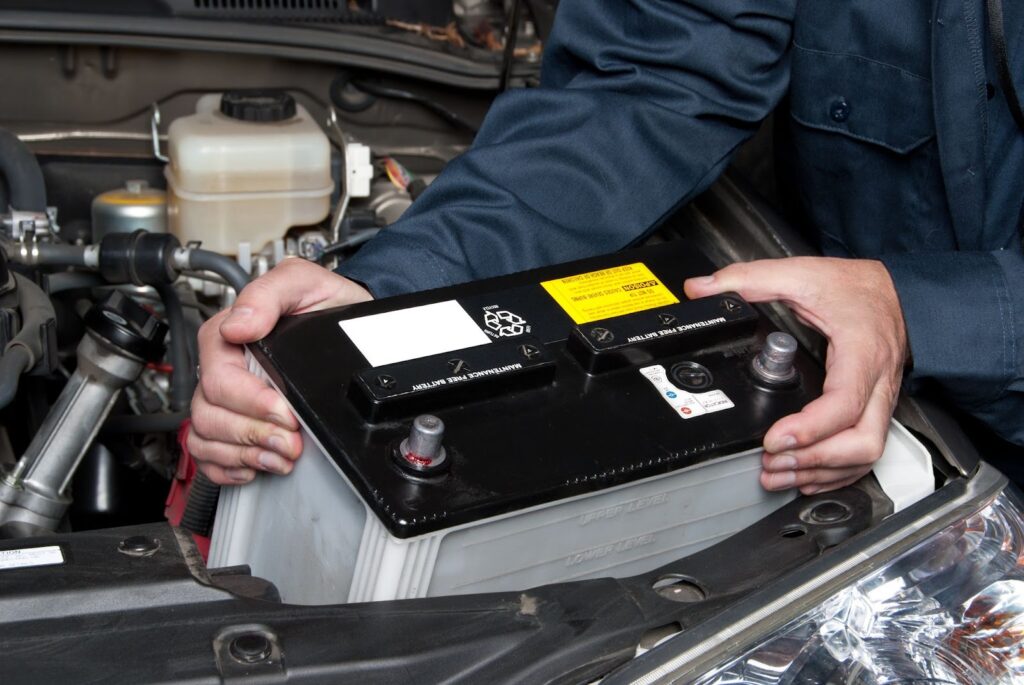 Yes. A decent-size winch can drain even a good battery much faster than most people think. You are pulling several times what your alternator can produce, so the winch is mostly eating straight out of the battery during those heavy pulls. Answer (40 words): A winch absolutely drains the battery while working under load, especially close to stall. Long or repeated pulls push voltage down quickly. Your alternator can slow the drop but not stop it. Running the engine helps, but it does not make you immune to discharge.
How Fast Does a Winch Drain a Battery?
Take a common scenario. A 9,500 lb winch on a mid-size rig is drawing about 350A for 3 minutes during a tough pull:- 350A × 0.05 hours ≈ 17.5 Ah on paper, ignoring Peukert effect.
Alternator Limitations
Most factory alternators are in the 90–180A range, and that is usually peak output at higher RPM. At idle, many of them are well below that. When your winch is pulling 300–500A, the alternator is just donating a portion of the current and the battery is filling in the rest. Still, running the engine while winching is non-negotiable in my book, because it:- Reduces how quickly the battery drains during a pull.
- Helps maintain higher system voltage which keeps winch speed and efficiency up.
- Cuts down the recovery time needed to get the battery back to a safe state of charge.
Voltage Sag & Performance
As you draw down the battery and it warms up internally, its resistance goes up and voltage sag under load gets worse. Once you dip much below 10V while winching, line speed falls off, the motor struggles, and everything in the circuit runs hotter than it should. With LiFePO4, there is another catch. If the BMS sees too low a voltage or too high a current, it can shut the pack down to protect it. With tired lead-acid, repeated deep sag can warp plates or cause internal shedding, which eventually kills the battery. If you are curious about parasitic loads and other ways you can be draining your battery outside of winching, see battery drain.Do You Need Dual Batteries for a Winch?
Some people run a single big AGM and never have an issue. Others kill batteries every season because they winch hard, camp with fridges, and run lights all night off that same battery. Whether you need dual batteries depends entirely on how you use the truck. Answer (40 words): Dual batteries are optional for casual winching but strongly recommended for long or repeated pulls, or for rigs running lots of accessories. A proper dual battery isolator relay or system like REDARC keeps your starting battery safe while letting the auxiliary take the abuse.Single vs Dual Battery: Pros & Cons
Single Battery Setup- Pros: Fewer parts, cheaper to build, less wiring to troubleshoot, and fewer failure points out on the trail.
- Cons: One hard recovery can drain the battery deep enough that you are rolling the dice on whether it will restart the engine afterward.
- Pros: More total Ah and RC, the ability to keep a clean starting battery isolated from the house/winch battery, and lots of flexibility for overland gear, inverters, and frequent winching.
- Cons: Extra cost for a second battery, tray, wiring, and an isolator. More weight on the front axle and more planning needed to mount everything solidly.
Role of a Dual Battery Isolator Relay
A dual battery isolator relay is what makes dual setups work the right way. It ties both batteries together when the system is charging, then splits them apart when the engine is off so you cannot accidentally drain your starter.- Switching voltage threshold: Most units connect around 13.2–13.7V when the alternator is charging and drop out again somewhere near 12.7V to protect the starter battery.
- Relay current rating: Expect 100–200A continuous on common units, with higher-end pieces handling 500A surge or more briefly for winching and jump-starting.
- Isolation time: Some smart units wait a few seconds after start-up before linking batteries, so the initial cranking load and voltage dip do not confuse the system.
- Manual override: Many offer a manual link function so you can parallel both batteries for jump-starting or emergency situations.
When Dual Batteries Become “Necessary”
- You routinely find yourself in situations that need long, heavy pulls. Deep mud, sand hills, fully loaded overland rigs, that sort of thing.
- Your vehicle runs fridges, lights, inverters, radios, or other accessories overnight and you still expect it to start strong in the morning.
- You have a large 10,000–12,000+ lb winch on a heavy truck or camper and you are often hours from help or cell signal.
- You are moving to a LiFePO4 auxiliary battery to power house loads, but want to keep a tried-and-true AGM or flooded battery for starting reliability.
Deep Cycle Battery for Winching
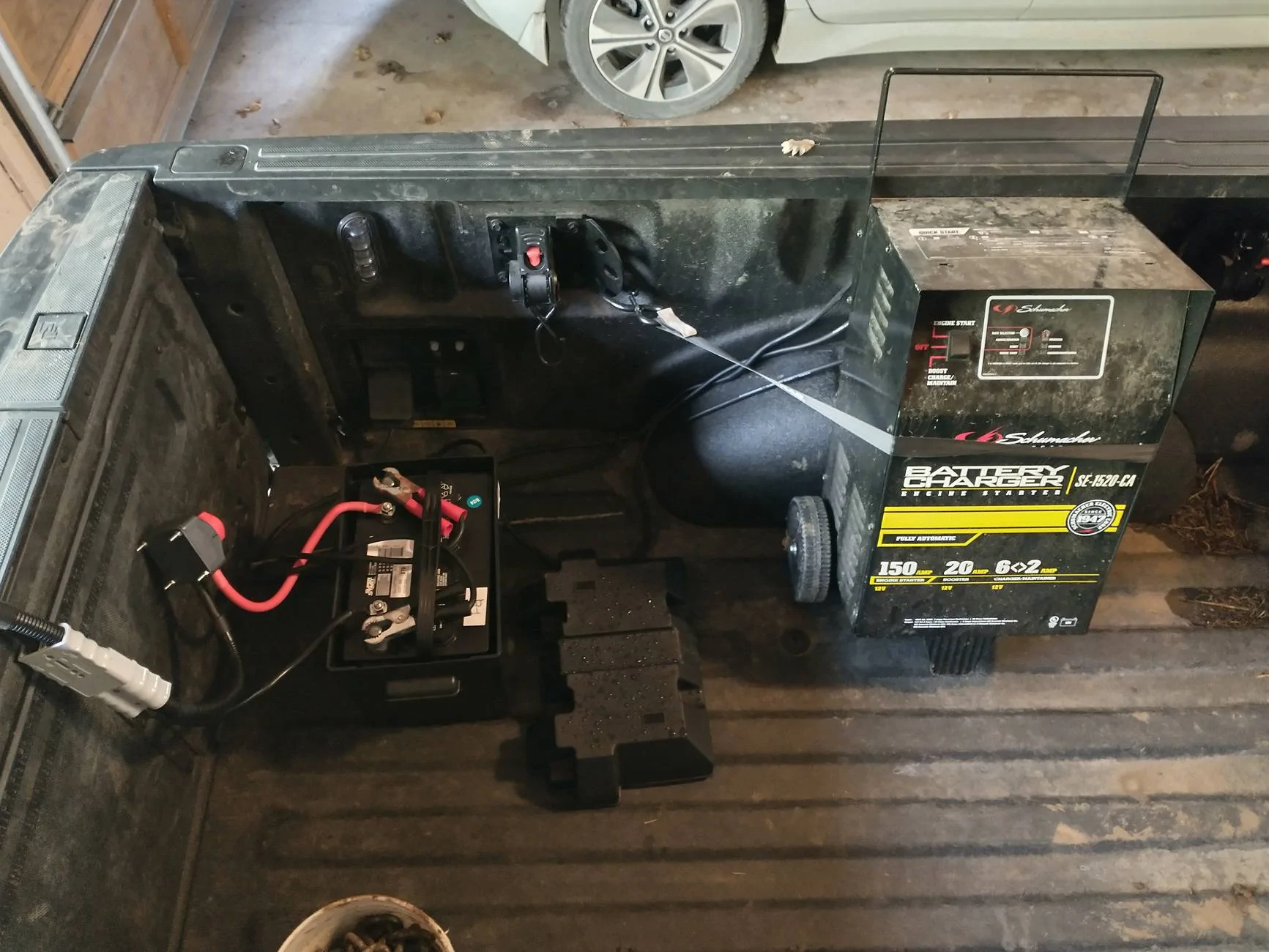 Deep cycle batteries are built with thicker plates so they can be discharged deeper and recharged more often without failing as quickly as a pure starting battery. The trade is that many deep cycle designs sacrifice some CCA to get that extra cycle life. Answer (40 words): A deep cycle battery handles repeated deeper discharges well, which makes it a great choice as an auxiliary or dedicated winch/house battery in a dual setup. On its own, if CCA is low, it is not ideal as your only starting battery. Use a high-CCA AGM dual-purpose if one battery must do it all.
Deep Cycle Battery Attributes
Typical traits you see on a 12V deep cycle spec sheet:- Reserve capacity: Often in the 150–230 minute range at 25A, which gives you a lot of accessory runtime.
- Ah rating: Usually 75–120 Ah for the common group sizes used on trucks and RVs.
- Cycle life (deep discharge): Often rated at 400–1,000+ cycles down to around 50% depth of discharge, as long as you recharge properly.
- CCA rating: Usually lower than a same-size starting battery, sometimes much lower if it is a true “marine deep cycle” design.
Where Deep Cycle Excels for Winching
- As a dedicated second battery that runs the winch, fridge, camp lights, and other loads while your starter battery is protected behind an isolator.
- For overland rigs that regularly pull the battery down to 50%–70% state of charge before solar or alternator brings it back up.
- In AGM “dual-purpose” models that keep good CCA for cranking but still offer better cycle life than a plain starting battery.
Where Deep Cycle Alone Falls Short
- If it is your only battery and its CCA is barely enough for winter starts or a high-compression engine, you will notice slow cranking and weak winch performance.
- If your winch routinely hits stall loads and you do not recharge fully soon after, even a deep cycle will age quickly and lose capacity.
Can You Run a Winch Off a Battery Charger? (Risks & When It Works)
A lot of folks in the shop ask if they can hook a high-amp charger to a dead battery and then run the winch. The short answer is no. A charger is there to help the battery, not to replace it as the main power source. Answer (40 words): Most battery chargers output 10–30A, which is tiny compared to a winch draw of 300–500A. Even heavy shop chargers cannot power the winch alone and may overheat or shut down if you try. At best, they assist the battery by slowing the discharge.Why Charger Amperage Matters
Even a “50A high-output” charger is peanuts next to a winch that can demand 400A or more. During a pull, the winch is still drinking almost everything from the battery. The charger just trickles more in than the alternator would in a garage situation. The main risks of trying to use a charger as a power source are:- Overheating: Chargers are built for charging, not as continuous high-current power supplies riding rapid load spikes. Pushing them hard for long pulls can cook components.
- Voltage instability: Cheaper chargers may ramp voltage up and down or trip protection circuits when they see the winch slam the load on and off.
- Warranty issues: Using gear this far outside its intended duty cycle is a good way to void the warranty and invite failures.
When a Smart Charger Can Work
A smart charger is still useful to have in the mix. It just needs to be used for support, not as the primary power feed.- Top-up during winch use: In a shop, a 25–50A smart charger on AC power can feed the battery while you are gently winching a vehicle onto a trailer. It slows how fast you drain the battery but still is nowhere near enough on its own.
- Fast recovery after a pull: Once the tough recovery is done, a charger in the 20–40A range is excellent for bringing the battery back to full charge in a controlled way, better than relying on short drives and a half-awake alternator.
When It Will Fail (and Why It’s a Bad Idea Alone)
- No battery present: Most chargers need to sense a stable battery before they even turn on. If you clip one directly to a winch with no battery in between, many will refuse to run or will fault out quickly.
- Insufficient current: Once the winch asks for a few hundred amps, a 10–20A charger will be completely overwhelmed. Voltage will nosedive, and the winch either will not move or will cycle in a way that abuses both tools.
- Heat and safety: Running a charger pinned at full output in a hot shop or engine bay for long periods is asking for failure and, in a worst case, fire.
Battery Maintenance for Winch Users (Charging, Storage, Temperature)
Winching beats up batteries. You are asking for huge current, in dirty environments, with lots of vibration. Good maintenance is the difference between a battery that taps out after a year and one that gives you reliable service for half a decade or more. Answer (40 words): After heavy winching, bring the battery back to full with a smart charger instead of relying only on the alternator. Before cold weather, test, clean, and fully charge. Keep it away from extreme heat, and regularly check cables and terminals for corrosion and voltage drop issues.Post-Pull Charging Protocol
- After a big recovery or several back-to-back pulls, assume you have burned off a major chunk of the battery’s usable capacity, even if it still cranks.
- Either drive at highway speeds for 30–60 minutes with minimal extra loads on, or hook up a smart charger in the 20–40A range and let it finish the job correctly.
- Do not leave a lead-acid battery sitting half drained. That is how you get sulfation, which permanently steals capacity and shortens its life.
Winter & Long-Term Storage
- Cold cuts capacity. At around 0°F, a typical lead-acid battery may only deliver 50–60% of its rated capacity, just when you want the winch most.
- Before you park the rig for weeks or months, fully charge the battery and put it on a maintenance/float charger if possible, especially for lead-acid designs.
- LiFePO4 batteries generally do not like being charged below freezing unless they have low-temp protection. Always follow the manufacturer’s temperature range guidelines or you risk damaging the cells.
Temperature Effect on Battery Capacity
Both lead-acid and LiFePO4 are sensitive to temperature swings, just in different ways.- High heat (90–120°F+): Speeds up chemical reactions, which increases self-discharge and accelerates internal wear. Keeping a battery right next to a hot turbo or exhaust is a good way to shorten its life.
- Extreme cold: Slows reactions, so cranking power drops and usable Ah goes down. This is where high CCA AGM units really show their value.
Inspection & Corrosion Prevention
- Give terminals and winch cables a quick inspection every 1–3 months. Trail rigs and salty climates need more frequent checks.
- Neutralize corrosion with a baking soda and water mix, scrub, rinse, then dry and coat with dielectric grease or a dedicated terminal protectant spray.
- Check every winch connection, including grounds to frame and engine block. Any looseness shows up as voltage drop, heat, and slower winch operation when you need it most.
Common Winch Battery Mistakes (and How to Fix Them)
- Mistake 1: Undersizing CCA and Ah. Fix: Use a realistic winch battery CCA chart or calculator and size the battery to your winch and climate, not just what was cheap at the parts store. Go for at least the recommended CCA and a higher RC if possible.
- Mistake 2: Relying solely on the alternator for recharge. Fix: After serious winching, treat the battery like it is half-drained. Put it on a smart charger in the garage to bring it back to 100% so sulfation does not slowly kill it between trips.
- Mistake 3: Ignoring voltage drop from small or corroded cables. Fix: Upgrade winch cables to the proper gauge for the length and amps, shorten runs where you can, and keep every terminal clean and coated so resistance stays low.
- Mistake 4: Using a pure deep cycle with low CCA as the only starting battery. Fix: Replace it with a high-CCA AGM dual-purpose if you are running a single battery, or add a dedicated starting battery and put the deep cycle on the auxiliary side.
- Mistake 5: Expecting a battery charger to run the winch. Fix: Accept that a charger is a support tool only. Put your money into a correctly sized battery and, if you winch a lot, a proper dual battery system instead of oversizing a charger.
- Mistake 6: No plan for cold-weather performance. Fix: In cold areas, bump CCA and lean toward strong AGM batteries. Protect them from deep cold if possible, and follow lithium manufacturers’ winter usage and charging recommendations closely.
FAQ: Winch Battery Questions Answered
1. What type of battery is best for a winch?
For most trucks and Jeeps, the best battery for a winch is a high-quality AGM battery with plenty of CCA, adequate Ah, and decent reserve capacity. AGM tolerates high current and off-road vibration better than basic flooded batteries, and it is far simpler to integrate cleanly than LiFePO4 for the average user.2. How do I size a battery for my winch?
Start by finding the winch’s stall amp requirement in the manual or on the spec sheet. Then choose a battery with adequate CCA for your winch size and climate, and look for at least 60–100 Ah depending on how big the winch is. Use the battery sizing calculator to turn winch amp draw into realistic battery needs.3. Does a winch drain the battery even when I’m not using it?
The winch motor itself pulls zero current when you are not pressing the switch. But certain winch controllers and accessories can introduce small parasitic draws. Those details, and how they interact with your vehicle, are covered in the battery drain section. Under normal conditions, the real drain happens only during active winching.4. Do I need a dual battery setup for my winch?
Not automatically. A strong single AGM works fine for occasional recoveries. A dual battery winch setup becomes important if you are winching often, running lots of auxiliary gear, or traveling far off-grid. In that case, use a quality dual battery isolator relay like those found in REDARC systems to keep the starter safe.5. Can I use a deep cycle marine battery for winching?
Yes, but be careful. Many marine deep cycle batteries trade away CCA for more cycle life. If it is going to start the engine and run the winch, choose one with strong starting specs or, better yet, a dual-purpose AGM specifically rated for starting and deep cycling.6. Is lithium (LiFePO4) good for winch batteries?
LiFePO4 gives you great cycle life and light weight and can be excellent as a house or assist battery in a dual setup. You just have to design around BMS current limits and cold-temperature quirks. Most builds still rely on a lead-acid (AGM) battery for starting, with LiFePO4 supporting accessories and winching.7. Will a battery charger alone run my winch?
No. Even the beefiest shop charger cannot deliver the 300–500A+ that a winch may demand on a heavy pull. A charger can help keep the battery from dropping as fast and can recharge it afterward, but it cannot stand in for the battery.8. How often should I replace my winch battery?
On a typical trail rig, a good AGM will often live 4–6 years if it is not abused and is kept charged. LiFePO4 can last many more cycles. If you notice slow cranking, sluggish winch performance, or trouble holding a charge even after proper maintenance, it is time to test and likely replace.9. Is there a simple way to check if my battery is strong enough for winching?
Yes. Watch the voltage during a pull. If it dives below about 10V almost immediately under load, or the winch slows sharply and stays slow, the battery can be undersized or near the end of its life. A proper load test at a shop will confirm its condition under high draw.10. Where can I learn more about motor current and wiring specifics?
This guide focuses on battery types, sizing, dual setups, and maintenance. For deeper electrical theory, winch motor current details, and recommended wiring practices, check out AGM vs lithium and the wiring guide at /winch/installation/.Final Summary & Next Steps
A dependable winch setup starts with a properly chosen winch battery. For most builds, a high-CCA AGM battery matched to your winch size and vehicle weight delivers the best mix of power, durability, and simplicity. If you wheel hard, overland, or run a lot of electrical gear, stepping up to dual batteries and possibly adding LiFePO4 auxiliaries tied together with a quality dual battery isolator relay or a REDARC-style system is money well spent. Before your next trip:- Look up your winch’s amp draw and make sure your battery’s CCA, Ah, and RC are realistically matched to it.
- Plan upgrades using the battery sizing calculator so you are not guessing on capacity.
- Study platform-specific tips like truck battery sizing for winch and Jeep battery upgrade guide before you buy parts.
📖 Related deep-dive: Winch size determines battery draw — for car-on-trailer loads, see our sizing a trailer winch for your car.
🔧 Cold-Weather Battery Test — -8°F Morning
Stranded once at -8°F after using a single flooded Group 31 for 3 winch assists in a row. Alternator couldn’t keep up. Battery dropped to 10.2 V, truck wouldn’t crank. Swapped to dual Odyssey PC1750T AGM + National Luna isolator. Retested the same scenario 6 months later: pulled 4 recoveries in -12°F, engine cranked first try every time. Voltage never dropped below 11.4 V on the start battery. AGM + isolator is non-negotiable for cold-weather winching.