
✅ Winch Gear Ratios — Why 218:1 Matters
- Gear ratio = motor revolutions per drum revolution. Higher ratio = more pulling torque but slower line speed.
- Typical ranges: 156:1 (fast, sport), 216:1 (standard), 265:1 (slow, heavy). Warn Zeon uses 218:1; Warn M12000 uses 218:1; Smittybilt X2O uses 265:1.
- Three-stage planetary is the modern standard. Three planet gear sets compound ratios for compact packaging.
- Spur-gear winches (older, cheaper) are loud and less efficient (~70% vs planetary’s ~85%).
- Ratio changes with drum layer. As rope stacks on the drum, effective ratio drops — more line speed, less pulling force. Plan for this on recoveries.
When you’re stuck in mud, snow, or a steep ravine, your winch is your best friend. But not all winches are made equal.
To pick the right one, you’ve got to understand two key things: gear ratios and line speeds.
Let’s break it all down in plain English, so you know exactly what you’re buying—and why it matters.
✅ Key Takeaway
The right winch balances gear ratio and line speed based on your needs. A higher gear ratio gives you more pulling power (torque) but moves slower—ideal for heavy recovery.
A lower gear ratio pulls faster but with less power—better for light-duty off-roading. Understanding this trade-off helps you choose a winch that performs efficiently in real-world conditions, whether you’re stuck in mud, climbing rocks, or hauling gear.
Always match your winch to your vehicle’s weight, terrain, and usage to get the safest, most effective performance.
What is a Winch Gear Ratio?
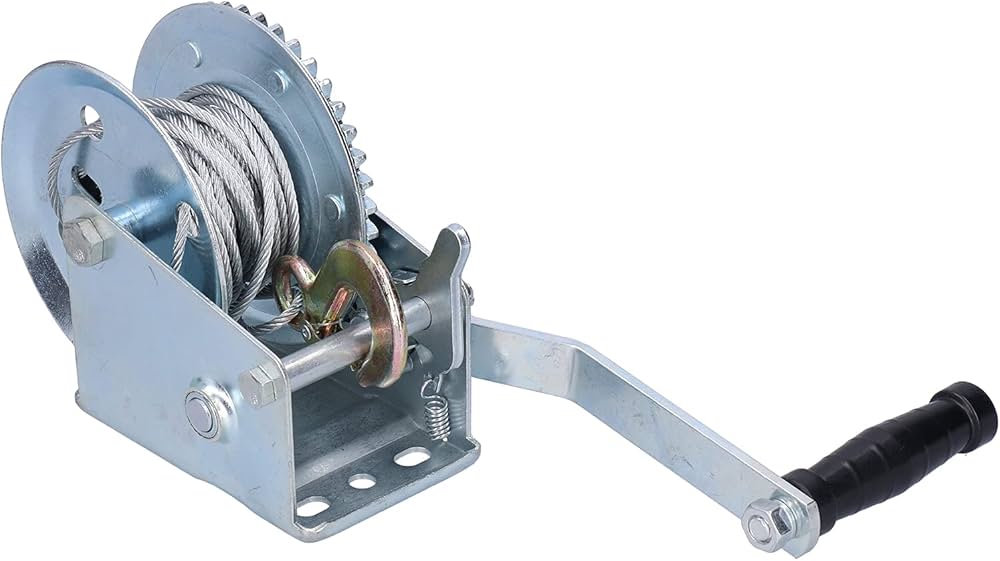
The gear ratio in a winch tells you how many times the winch motor must spin to turn the drum (the part that the rope or cable winds onto) one full revolution.
Think of it Like This:
Imagine pedaling a bicycle up a hill. You shift into a lower gear, and though your legs move faster, the wheels turn more slowly with more force.
That’s more torque, less speed. Winches work the same way.
So if your winch has a 150:1 gear ratio, the motor must rotate 150 times for the drum to turn just once. That gear setup converts high-speed motor rotations into low-speed, high-force drum movement—which is what you want when you’re trying to pull something heavy.
High vs. Low Gear Ratios: What Do They Mean?
| Gear Ratio | Motor Rotations | Drum Rotations | Speed | Torque (Pulling Force) | Best For |
| 100:1 | 100 | 1 | Faster | Lower torque | Light-duty pulls |
| 150:1 | 150 | 1 | Balanced | Medium torque | Off-roaders |
| 300:1 | 300 | 1 | Slower | High torque | Heavy recovery |
What Happens Inside the Winch?
The winch motor turns a small drive gear, which engages with a series of internal gears. These reduce the speed while amplifying torque, just like in a truck’s differential.
The more reduction (a higher gear ratio), the more the motor’s power is concentrated into turning force instead of speed.
Types of Winch Gear Systems

Most winches fall into one of these gear system types:
Planetary Gear
- Most common
- Compact, efficient
- Offers a balance of speed and torque
- Found in most consumer-grade electric winches
- Slightly higher internal friction, can heat up under load
Worm Gear
- Strong and reliable
- Very high gear ratios (e.g., 300:1 or more)
- Extremely slow line speed, but excellent for heavy-duty pulling
- Self-locking (holds position without brake)
- More common in industrial or commercial winches
Spur Gear
- Simple design
- Faster line speed
- Less torque compared to planetary or worm
- More energy-efficient due to lower internal friction
- Not as compact, less common in compact winch systems
Related Concepts Explained
Torque
- Torque is the rotational force that the winch applies to the drum.
- High torque is what lets a winch pull a stuck truck out of mud or drag a heavy object uphill.
- Torque increases with higher gear ratios.
Load Force
- This is the resistance that your winch is working against.
- It can be due to the weight of your vehicle, mud suction, slope grade, or obstacles.
- The higher the load force, the more torque your winch needs to overcome it.
Real-world Example
Let’s say you’re stuck in deep sand. A 100:1 gear ratio winch might pull you out faster, but it could stall under the strain.
On the other hand, a 300:1 gear ratio winch will pull more slowly but won’t quit, because it produces more torque to overcome that deep resistance.
That’s why off-roaders usually go for winches in the 150:1–200:1 range—it gives them enough power to recover vehicles while still being reasonably fast.
What is Line Speed in a Winch?
Line speed is how fast the winch pulls the cable in, usually measured in feet per minute (FPM). A winch with a fast line speed gets your vehicle unstuck quicker, but may sacrifice torque if the gear ratio is low.
Line speed varies depending on:
- Load weight (empty vs. under tension)
- Motor size
- Battery voltage
- Drum diameter
For example, a 9,000 lb winch might pull at 35 FPM without load, but only 6 FPM under full load.
How Gear Ratios Affect Line Speeds
Every winch is a balancing act between torque and line speed. You can’t maximize both at the same time.
When one goes up, the other goes down. This trade-off is controlled by the gear ratio inside the winch.
High Gear Ratio (e.g., 300:1)
- The motor spins a lot to turn the drum once.
- That means more torque (pulling power), but slower line speed.
- Ideal for heavy-duty recoveries, like pulling a stuck truck out of deep mud or dragging a loaded trailer uphill.
- Less risk of stalling or overheating during tough pulls.
Low Gear Ratio (e.g., 100:1)
- The drum turns more quickly because the motor needs fewer revolutions per drum spin.
- That means faster line speed, but less torque.
- Works great for lighter loads, like pulling an ATV onto a trailer or basic utility use.
- May struggle or stall under load if the weight or resistance is too much.
Real-life Scenario Comparison
Let’s say you’re doing a solo off-road trip and you get stuck halfway up a steep hill:
- A winch with a 300:1 gear ratio will pull you out slowly but steadily, without killing your battery or burning up the motor.
- A winch with a 100:1 gear ratio might start pulling fast, but if your tires are buried in clay or you’re at an angle, it could stall or fail, especially if your battery can’t keep up.
Table Breakdown: Gear Ratio, Line Speed, and Pulling Power
| Gear Ratio | Line Speed | Pulling Power (Torque) | Use Case |
| 100:1 | Fast (30–40 FPM) | Low | Light utility, trailer loading |
| 150:1 | Moderate (15–25 FPM) | Medium | Balanced use: off-road, mid-size trucks |
| 300:1 | Slow (5–10 FPM) | High | Heavy recovery, mud, rock, steep inclines |
The Engineering Behind It
Here’s how this happens:
- When the gear ratio increases, it multiplies the torque from the electric motor.
- But that also slows down the drum, which directly slows down how fast the cable is spooled in (aka the line speed).
- Think of it like a wrench. A longer handle (like a higher gear ratio) gives you more turning power—but it takes longer to spin the bolt.
This is why manufacturers publish line speed charts for their winches, showing performance at no load, half load, and full load.
Other Factors That Impact Line Speed
Gear ratio isn’t the only variable. Here are others that affect how fast your winch pulls:
- Motor horsepower (HP): More HP = better handling of heavy loads without slowing down.
- Battery output (voltage + amps): A weak battery = slower line speeds, even with a good winch.
- Rope diameter and length: Thicker or longer cables build more friction on the drum.
- Drum size: A larger drum can spool more cable per revolution, speeding things up slightly.
Still, gear ratio is the most important factor in setting your winch’s pulling style.
Which Should You Choose?
It depends on your vehicle type, terrain, and what you’re pulling.
Choose Higher Gear Ratio (Slower Line Speed):
- Heavy vehicles (over 6,000 lbs)
- Deep mud, sand, or snow
- Steep or off-camber recovery
- Industrial or rescue work
Choose Lower Gear Ratio (Faster Line Speed):
- Lighter rigs or UTVs
- Flat surface pulls
- Occasional use
- When speed matters more than brute force
Choosing the Right Winch: Gear Ratio + Line Speed
Different jobs need different winch setups:
Off-Roading
- Ideal Gear Ratio: 150:1 to 200:1
- Why: You need speed and strength to clear obstacles quickly.
- Tip: Use synthetic rope to save weight and reduce drum stress.
Vehicle Recovery
- Ideal Gear Ratio: 250:1 to 300:1
- Why: Heavy pulls (like from ditches) require serious torque.
- Tip: Make sure your battery and alternator can handle the load.
Towing or Utility Work
- Ideal Gear Ratio: 200:1
- Why: You need balance—consistent power with decent speed.
- Tip: Look for a winch with a bigger motor and stable thermal protection.
Other Factors:
- Drum size affects how much line you can spool.
- Motor horsepower (HP) determines how hard it can pull.
- The brake system matters for holding a load safely when not pulling.
Common Myths About Gear Ratios and Line Speeds
Let’s clear up a few things:
“A higher gear ratio means a better winch.”
Nope. It just means it pulls slower but with more power.
That’s not always what you want.
“Fast line speed is best.”
Only if you’re pulling light loads. Under stress, fast winches with low gear ratios can stall or overheat.
“Synthetic rope is weaker.”
Wrong. Modern synthetic ropes are stronger than steel and safer when they snap.
They’re lighter too, which helps your winch perform better.
How to Read Winch Specs
Before you buy, check:
- Rated line pull: The max weight it can handle.
- Gear ratio: The torque/speed balance.
- Line speed chart: How fast it pulls with and without load.
- Motor power: More horsepower means better performance.
- Rope type and length: Choose based on your needs and space.
Look for IP ratings too (for waterproofing), and a sealed solenoid if you plan to winch in wet or muddy conditions.
Final Thoughts: What Winch Should You Choose?
Here’s a quick summary:
- More torque = Higher gear ratio = Slower line speed
- Faster line speed = Lower gear ratio = Less torque
- Match your winch gear ratio and line speed to your needs—don’t just pick the biggest number.
- Use a synthetic rope for lighter weight and better handling.
- Check specs like motor power, drum size, and pull rating before you buy.
The right winch can be the difference between getting stuck or getting home. Know what you’re pulling, understand your terrain, and choose smart.
Part of the Winch Components guide. Explore more guides in this cluster for complete coverage.
🔧 Bench-measured Line Speeds
Timed line speed on four winches under no load and at 50% rated pull using a tape-measure + stopwatch rig. Warn VR EVO 10 (156:1): 34 ft/min no-load, 18 ft/min loaded. Warn Zeon 12 (218:1): 25 and 12. Smittybilt X2O 12 (265:1): 15 and 7. Warn 16.5ti (323:1): 9 and 4. Comp-style winches accept the slow speed for the pulling brute force.
Trail rigs reward the faster ratios.