
Off-road recovery tools like recovery boards and winches are essential for different terrain situations. This guide compares their functions, pros and cons, and ideal use cases to help you choose the right tool for your off-roading needs
| Feature | Recovery Boards | Winches |
|---|---|---|
| Best For | Soft terrain (sand, mud) | Steep inclines, deep ditches |
| Power Source | Manual | Electric/hydraulic |
| Setup Time | Quick | Slower, more involved |
| Ideal Vehicle Type | Any with tire contact | 4×4 with front/rear mounting points |
| Cost | Low to Moderate | Moderate to High |
Key Takeaway
Recovery boards and winches are both essential off-road recovery tools, but each shines in different scenarios. Recovery boards are ideal for soft terrain like sand, snow, and shallow mud, especially when you’re alone and need a quick, manual solution. Winches offer controlled power for tackling deep mud, steep slopes, or rocky trails where traction alone isn’t enough. For the most versatile and reliable recovery setup, carrying both tools is the smart choice.
What Are Recovery Boards?
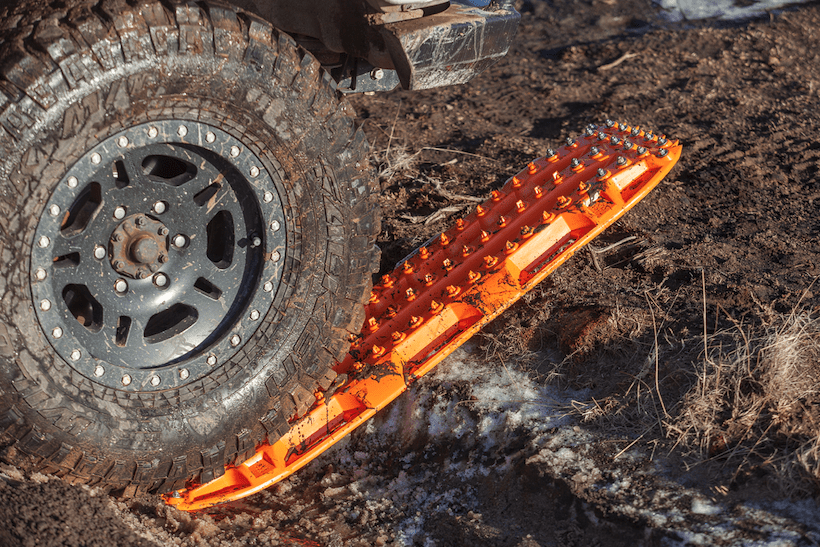
Recovery boards—also called traction boards, traction mats, or recovery tracks—are essential self-recovery tools designed to help vehicles regain traction when stuck in loose or slippery terrain.
These tools are especially useful in environments where traditional towing or winching is not practical—like soft sand, deep snow, or sticky mud.
What They’re Made Of
Most modern recovery boards are made from high-density polyethylene (HDPE) or glass-filled nylon. These materials are chosen for their:
- Flexibility: They can bend slightly under pressure without snapping.
- Durability: They withstand cold, UV rays, and repeated tire pressure.
- Grip-enhancing texture: Raised treads or teeth provide friction against tire treads and the terrain.
Some boards even use fiberglass reinforcements or thermoplastic elastomers (TPE) for additional strength in extreme conditions.
How Recovery Boards Work
Recovery boards work by increasing the contact patch between your tire and the ground. When your tires spin in soft terrain like sand or snow, they dig deeper instead of moving forward.
By placing recovery boards under the drive wheels, they give your tires something solid and grippy to “bite” into—helping the vehicle climb out of a bogged-down spot.
The tread pattern on most boards mimics the grooves in off-road tires and interlocks with the tire’s lugs. This prevents slippage and allows your vehicle to gain forward momentum.
Design Features That Matter
1. Aggressive Tread Surface
The top side of the board often has raised knobs or spikes designed to interlock with off-road tire patterns. Some are directional for better traction control.
2. Underside Teeth
The underside may also have anti-slip designs to keep the board stable against the ground.
3. Dual Function Ends
Many recovery boards feature shovel-style ends, allowing you to dig out debris or compacted snow before positioning the board.
4. Size and Thickness
Standard lengths range from 35 to 48 inches, with heavy-duty models going even longer. Thicker boards handle heavier vehicles, while compact ones suit ATVs, UTVs, and smaller SUVs.
5. Integrated Handles and Mounting Points
These make them easy to carry and secure on a roof rack or rear tire carrier.
Best Terrain for Recovery Boards
Recovery boards work best on low-friction surfaces like:
- Soft sand (dunes, beaches, deserts)
- Powder snow or icy patches
- Shallow to medium mud pits
- Loose gravel or volcanic ash
They are less effective on:
- Hard, rocky terrain
- Deep ruts where underbody clearance is an issue
- Situations requiring lifting or pulling force (e.g., water crossings, hill recovery)
In those cases, a winch or kinetic recovery rope may be a better option.
Best Use Cases for Recovery Boards
Recovery boards are particularly helpful for:
- Solo travelers or overlanders without a spotter
- Vehicles without winches, like crossovers or lightweight 4x4s
- Emergency scenarios where battery-powered equipment fails
Because they’re manual and self-contained, they don’t require a power source, winch line, or another vehicle to function. This makes them a go-to option for overlanders, expedition drivers, and off-roaders looking for redundancy.
Popular Brands and Their Differences
- MaxTrax – High-end, Australian-made boards known for durability, UV resistance, and aggressive teeth.
- TRED Pro – Modular design with replaceable teeth and excellent flexibility.
- X-Bull – Affordable alternative with decent build quality for casual off-roaders.
- ActionTrax – Made in the USA, with metal-reinforced teeth for extreme traction.
How to Store and Mount Recovery Boards
Recovery boards can be mounted:
- On a roof rack
- Rear-mounted tire carriers
- Inside the trunk using quick-release mounts
- On side panels using universal brackets
Proper storage prevents UV degradation and ensures they’re ready when needed.
What Is a Winch?
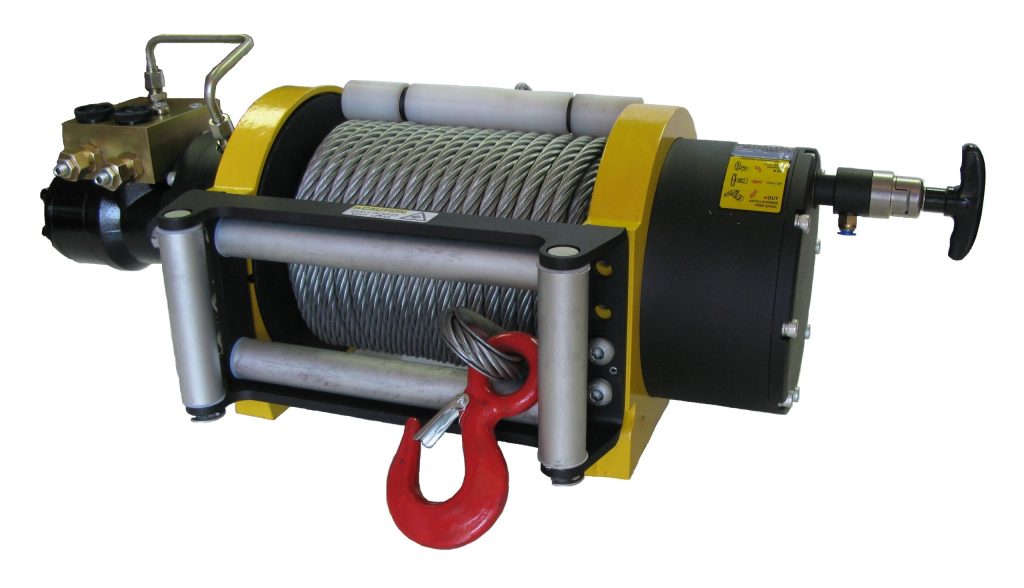
A winch is a mechanical recovery system designed to pull, lift, or reposition a vehicle using a rotating spool (drum) and a length of rope or cable. For off-roaders, it’s one of the most reliable tools for vehicle self-recovery in harsh, unpredictable terrain.
Read more about What is winch in detail
How to Set Up a Winch for Recovery
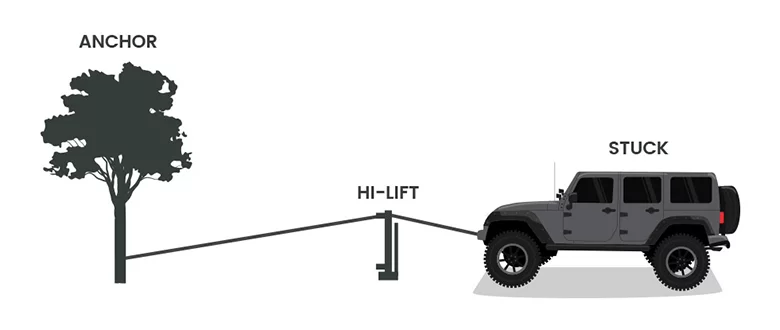
A winch is only as good as your anchor point. You’ll need something solid and stable to pull against, like:
- A large tree (use a tree saver strap to avoid damage)
- Another vehicle
- A buried spare tire (in sand)
- A ground anchor if nothing else is available
Always use a snatch block or pulley to double your pulling power and adjust pulling angles. This reduces strain on the motor and increases safety.
When to Use a Winch
A winch is the preferred recovery tool when:
- You’re high-centered on a rock with wheels off the ground
- Stuck in deep clay or boggy mud
- Attempting a steep incline with poor traction
- You’re off-grid without a second vehicle to help
In these situations, traction boards won’t help because the tires aren’t contacting the ground—or the resistance is too great for manual methods.
Common Winch Brands and Features
Some of the most trusted winch brands include:
- Warn – Premium performance, waterproof, American-made
- Smittybilt – Budget-friendly with reliable features
- Superwinch – Known for compact, durable designs
- Badland – Harbor Freight’s brand, great for occasional use
Important features to look for:
- IP68 waterproof rating
- Integrated solenoid box
- Synthetic line with protective sheath
- Load-holding brake
- Fairlead compatibility (hawse vs roller)
Winching Safety Essentials
Winching is effective but dangerous if done incorrectly. Here are key safety practices:
- Always wear gloves when handling winch cable
- Use a winch line damper (a weighted blanket or dampener) to reduce snapback risk
- Keep bystanders at least 1.5 times the length of the cable away
- Never hook the winch cable back onto itself—use a D-shackle or recovery ring
Recovery Boards vs Winches: Pros and Cons
| Feature | Recovery Boards | Winches |
| Ease of Use | Simple, no setup required | Needs wiring, anchor, and control setup |
| Weight | Lightweight and portable | Heavy, fixed on the vehicle |
| Power Source | Manual effort only | Needs vehicle battery (or hydraulic system) |
| Solo Recovery | Easy in soft terrain | Excellent, especially in tricky situations |
| Maintenance | Rinse and store | Needs regular inspection and care |
| Cost | Budget-friendly | Can be expensive (especially high-end ones) |
When to Use Recovery Boards
Recovery boards work best in soft, shallow terrains. I always throw a pair in the back when I know I’ll be hitting sandy trails, light snow, or muddy paths that aren’t too deep.
Use them when:
- You’re driving solo and don’t want to rely on electrical systems.
- You’re stuck in sand, loose gravel, or fresh powdery snow.
- There’s no anchor point nearby for a winch.
Here’s how I use them:
- Clear out the loose material around your tires.
- Wedge the boards under the tires with the tread facing up.
- Shift to low gear and drive gently forward.
They also double as shovels or ramps if you need to bridge a small trench.
When to Use a Winch
Winches are your go-to when things get serious. Think steep hills, deep mud holes, or rocky trails with underbody hang-ups. I’ve used mine to pull out a buddy’s Jeep stuck axle-deep in clay and to recover my own rig after a misstep on a mountain trail.
Use a winch when:
- You’re stuck in deep mud, on an incline, or over rocks.
- You have a secure anchor point nearby.
- You need controlled, powerful recovery over longer distances.
Important winch accessories include:
- Tree savers and snatch blocks
- D-ring shackles
- Winch damper (for safety)
- Remote controller
Case Studies: Real Recovery Examples
Experience 1: Sand Dunes
On a solo desert trip, I got bogged down in soft sand. No trees, no winch anchors. Recovery boards were all I had, and they worked like a charm.
Experience 2: Rocky Hill Climb
On a mountain trail, I lost traction trying to climb over large boulders. My front tires were hanging in the air. Winch to the rescue—used a snatch block to pull at an angle and get back on the trail.
Experience 3: Deep Mud Pit
After heavy rain, I hit a patch of swampy mud. My recovery boards sank with no grip. The winch pulled me out—slow and steady.
Experience 4: Forest Overland Trip
Sometimes, I use both. Recovery boards to give initial traction, and the winch for controlled movement. It’s all about knowing what your rig needs in the moment.
Why Carry Both?
Each tool has its sweet spot. Recovery boards are perfect for fast, light recoveries. Winches handle the heavy lifting. When you’re far from help, it’s smart to carry both. I store my boards on the roof rack and have my winch ready on the bumper.
Redundancy in recovery gear isn’t just smart—it’s safe.
Best Gear Recommendations
Top Recovery Boards:
- MaxTrax MKII – Durable, top-rated
- TRED Pro – High flex and grip
- X-Bull – Budget-friendly but solid
Top Winches:
- Warn VR Evo 10 – Reliable, great all-around
- Smittybilt X20 – Waterproof and wireless
- Badland ZXR 12000 – Affordable heavy-duty option
Expert Recovery Tips
- Always assess terrain before recovery.
- Use low tire pressure in sand for better traction.
- Don’t yank on a stuck vehicle—slow and steady wins.
- Use a winch dampener to avoid flying cables if something snaps.
- Practice your recovery techniques before you really need them.
FAQs
Are recovery boards better than a winch?
No—just different. Boards are great for sand and solo trips. Winches are better for deep mud and steep trails.
Can I use both tools together?
Yes, combining them often works best—boards for traction, winch for pulling.
Do I need a winch for casual off-roading?
Not always. Recovery boards might be enough. But if you’re going remote, a winch adds peace of mind.
What should I buy first—boards or winch?
Start with recovery boards. They’re cheaper, easy to use, and solve most beginner problems.
Final Thoughts
Choosing between recovery boards and a winch isn’t about which is better—it’s about what fits your adventure. Know your terrain, your vehicle, and your limits. I always carry both because I’d rather have it and not need it than the other way around.
Next time you head off-road, ask yourself: What recovery situation will I most likely face? Then pack accordingly.